%20%20--%3E%0A%3Csvg%20version%3D%221.1%22%20xmlns%3D%22http%3A%2F%2Fwww.w3.org%2F2000%2Fsvg%22%20xmlns%3Axlink%3D%22http%3A%2F%2Fwww.w3.org%2F1999%2Fxlink%22%20x%3D%220px%22%20y%3D%220px%22%0A%09%20viewBox%3D%220%200%201055.1%20200%22%20style%3D%22enable-background%3Anew%200%200%201055.1%20200%3B%22%20xml%3Aspace%3D%22preserve%22%3E%0A%3Cstyle%20type%3D%22text%2Fcss%22%3E%0A%09.st0%7Bfill%3A%23231F20%3B%7D%0A%09.st1%7Bfill%3A%230E203C%3B%7D%0A%09.st2%7Bfill%3A%23EC4324%3B%7D%0A%09.st3%7Bfill%3A%23FFFFFF%3B%7D%0A%3C%2Fstyle%3E%0A%3Cg%20id%3D%22Template%22%3E%0A%3C%2Fg%3E%0A%3Cg%20id%3D%22Layer_2%22%3E%0A%09%3Cpath%20class%3D%22st3%22%20d%3D%22M58.3%2C200.3h82.4c12.4%2C0%2C21.7-1.5%2C28-4.5c20.2-9.6%2C30.2-26.1%2C30.2-49.3c0-3.2-0.2-9.3-0.6-18.3h-65.1v14.9%0A%09%09c-0.9%2C3.9-3.4%2C5.8-7.5%2C5.8H73.2c-5%2C0-7.5-2.5-7.5-7.5V59.2c0-5%2C2.5-7.5%2C7.5-7.5h52.5c5%2C0%2C7.5%2C2.1%2C7.5%2C6.4v10.8h65.7V55.7%0A%09%09c0-16.3-3.8-28.3-11.4-36.1c-8.8-12.9-24.7-19.3-47.4-19.3H58.9C47%2C0.3%2C38%2C1.7%2C32%2C4.3c-21.3%2C9-32%2C26.1-32%2C51.4v88%0A%09%09c0%2C16.5%2C3.6%2C28.7%2C10.9%2C36.6C20.1%2C193.7%2C35.9%2C200.3%2C58.3%2C200.3z%22%2F%3E%0A%09%3Cpolygon%20class%3D%22st3%22%20points%3D%22596.6%2C64%20596.6%2C0.8%20400.1%2C0.8%20400.1%2C64%20442.7%2C64%20442.7%2C51.3%20466.1%2C51.3%20466.1%2C148.1%20442.1%2C148.1%20%0A%09%09442.1%2C199.9%20554.8%2C199.9%20554.8%2C148.1%20531.5%2C148.1%20531.5%2C51.4%20554.8%2C51.4%20554.8%2C64%20%09%22%2F%3E%0A%09%3Cpolygon%20class%3D%22st3%22%20points%3D%22942.4%2C148.5%20942.4%2C200.2%201055.1%2C200.2%201055.1%2C148.5%201031.8%2C148.5%201031.8%2C51.2%201055.1%2C51.2%201055.1%2C0.8%20%0A%09%09943.1%2C0.8%20943.1%2C51.3%20966.3%2C51.3%20966.3%2C80%20888.9%2C80%20888.9%2C51.3%20912.6%2C51.3%20912.6%2C0.5%20800.1%2C0.8%20800.1%2C51.4%20823.5%2C51.4%20823.5%2C148.6%20%0A%09%09800.1%2C148.6%20800.1%2C200.1%20912.6%2C200.1%20912.6%2C148.6%20888.9%2C148.6%20888.9%2C116.4%20966.3%2C116.4%20966.3%2C148.5%20%09%22%2F%3E%0A%09%3Cpolygon%20class%3D%22st2%22%20points%3D%22315.5%2C83.9%20299.6%2C34.9%20283.7%2C83.9%20232.2%2C83.9%20273.9%2C114.1%20258%2C163.1%20299.6%2C132.8%20341.3%2C163.1%20%0A%09%09325.4%2C114.1%20367%2C83.9%20%09%22%2F%3E%0A%09%3Cpolygon%20class%3D%22st2%22%20points%3D%22715.6%2C83.9%20699.7%2C34.9%20683.8%2C83.9%20632.3%2C83.9%20674%2C114.1%20658%2C163.1%20699.7%2C132.8%20741.3%2C163.1%20%0A%09%09725.4%2C114.1%20767.1%2C83.9%20%09%22%2F%3E%0A%3C%2Fg%3E%0A%3C%2Fsvg%3E%0A)

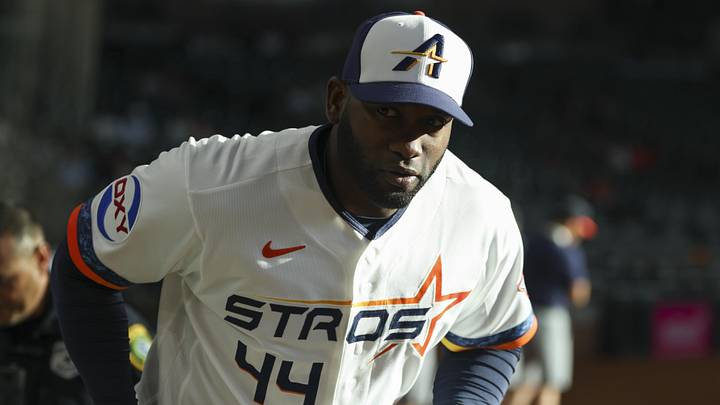
If the Houston Astros do decide to sell at the trade deadline, Yordan Alvarez could end up being the prize of the trade market. The soon-to-be 29-year-old superstar is showing folks that discounting him based on an injury-plagued 2025 was foolish, and that he's still a top-five hitter in MLB. With two years and $53.7 million remaining on his deal after 2026, he's incredibly affordable relative to his age and production.
A top-tier slugger with a below-market contract in the prime of his career should net a true king's ransom. If rebuilding is on Houston's mind, dealing Alvarez is the best possible path forward, given the club's barren farm system.
Add in the fact that the Kyle Tucker trade is still fresh in everyone's mind, and it seems like a slam dunk. There are many reasons why this is a drastically different scenario from the circumstances that surrounded the Astros trading away Tucker.
Astros insider points out why the Astros won't trade Yordan Alvarez, even though it may be the best path forward
Astros insider Chandler Rome addressed the distinction between the Tucker situation and the scenario concerning trading Alvarez in July. There are four salient points.
One, Tucker was in the final year of his contract, and on the heels of Juan Soto's record-setting pact with the Mets, the general sentiment was that Tucker was going to get something in the range of $400-$500 million on his next deal. The Astros were never going to pay that. With Alvarez, that's not a consideration until after the 2028 season. The urgency simply isn't there.
The next important point was the environment in which a deal would occur. The Tucker trade came in the offseason and netted Houston two major league talents with team control in Isaac Paredes and Hayden Wesneski, as well as a close-to-ready prospect in Cam Smith. The Astros wanted to compete at the time, so a rebalancing of assets made sense.
At the deadline, that sort of package doesn't exist. No contender is going to give up a player of Paredes' caliber off its major league roster coming into the home stretch, so instead, what the Astros would wind up with by trading Alvarez would be a ton of talented prospects that are a ways away from the majors.
That leads us to the next problem, Jim Crane. Crane has reportedly already poured cold water on the idea of a fire sale. Crane has also stated that the championship window will remain open as long as he owns the team. That means even a soft rebuild (which certainly wouldn't include trading Alvarez) may be out of the question.
Lastly, there's the Dana Brown of it all. Brown is a lame duck general manager whose only hope of saving his job is to find a way to claw back into contention. The only way to do that is to buy, rather than sell. Given the mediocrity present throughout the division and the American League at large, the Astros remain in striking distance, where some smart buys could actually get them to a wild card spot or even the division crown.
Those are all the reasons why Houston won't trade its best player, but the reality is that it should. Even if the club fights back and makes the playoffs, is it really set up to make a deep run? Kicking the can down the road on a rebuild only extends the pain as their trade chips age, become more expensive, and come with reduced control, deteriorating their trade value in the process.
The most dangerous thing that the Astros could do is take half measures. Marginal additions or subtractions won't move the needle in 2026, and they'll only extend the pain the organization will feel once it finally faces reality. Trading Alvarez now is the bold step they need to take, even though they won't.
 Add us as a preferred source on Google