%20%20--%3E%0A%3Csvg%20version%3D%221.1%22%20xmlns%3D%22http%3A%2F%2Fwww.w3.org%2F2000%2Fsvg%22%20xmlns%3Axlink%3D%22http%3A%2F%2Fwww.w3.org%2F1999%2Fxlink%22%20x%3D%220px%22%20y%3D%220px%22%0A%09%20viewBox%3D%220%200%201055.1%20200%22%20style%3D%22enable-background%3Anew%200%200%201055.1%20200%3B%22%20xml%3Aspace%3D%22preserve%22%3E%0A%3Cstyle%20type%3D%22text%2Fcss%22%3E%0A%09.st0%7Bfill%3A%23231F20%3B%7D%0A%09.st1%7Bfill%3A%230E203C%3B%7D%0A%09.st2%7Bfill%3A%23EC4324%3B%7D%0A%09.st3%7Bfill%3A%23FFFFFF%3B%7D%0A%3C%2Fstyle%3E%0A%3Cg%20id%3D%22Template%22%3E%0A%3C%2Fg%3E%0A%3Cg%20id%3D%22Layer_2%22%3E%0A%09%3Cpath%20class%3D%22st3%22%20d%3D%22M58.3%2C200.3h82.4c12.4%2C0%2C21.7-1.5%2C28-4.5c20.2-9.6%2C30.2-26.1%2C30.2-49.3c0-3.2-0.2-9.3-0.6-18.3h-65.1v14.9%0A%09%09c-0.9%2C3.9-3.4%2C5.8-7.5%2C5.8H73.2c-5%2C0-7.5-2.5-7.5-7.5V59.2c0-5%2C2.5-7.5%2C7.5-7.5h52.5c5%2C0%2C7.5%2C2.1%2C7.5%2C6.4v10.8h65.7V55.7%0A%09%09c0-16.3-3.8-28.3-11.4-36.1c-8.8-12.9-24.7-19.3-47.4-19.3H58.9C47%2C0.3%2C38%2C1.7%2C32%2C4.3c-21.3%2C9-32%2C26.1-32%2C51.4v88%0A%09%09c0%2C16.5%2C3.6%2C28.7%2C10.9%2C36.6C20.1%2C193.7%2C35.9%2C200.3%2C58.3%2C200.3z%22%2F%3E%0A%09%3Cpolygon%20class%3D%22st3%22%20points%3D%22596.6%2C64%20596.6%2C0.8%20400.1%2C0.8%20400.1%2C64%20442.7%2C64%20442.7%2C51.3%20466.1%2C51.3%20466.1%2C148.1%20442.1%2C148.1%20%0A%09%09442.1%2C199.9%20554.8%2C199.9%20554.8%2C148.1%20531.5%2C148.1%20531.5%2C51.4%20554.8%2C51.4%20554.8%2C64%20%09%22%2F%3E%0A%09%3Cpolygon%20class%3D%22st3%22%20points%3D%22942.4%2C148.5%20942.4%2C200.2%201055.1%2C200.2%201055.1%2C148.5%201031.8%2C148.5%201031.8%2C51.2%201055.1%2C51.2%201055.1%2C0.8%20%0A%09%09943.1%2C0.8%20943.1%2C51.3%20966.3%2C51.3%20966.3%2C80%20888.9%2C80%20888.9%2C51.3%20912.6%2C51.3%20912.6%2C0.5%20800.1%2C0.8%20800.1%2C51.4%20823.5%2C51.4%20823.5%2C148.6%20%0A%09%09800.1%2C148.6%20800.1%2C200.1%20912.6%2C200.1%20912.6%2C148.6%20888.9%2C148.6%20888.9%2C116.4%20966.3%2C116.4%20966.3%2C148.5%20%09%22%2F%3E%0A%09%3Cpolygon%20class%3D%22st2%22%20points%3D%22315.5%2C83.9%20299.6%2C34.9%20283.7%2C83.9%20232.2%2C83.9%20273.9%2C114.1%20258%2C163.1%20299.6%2C132.8%20341.3%2C163.1%20%0A%09%09325.4%2C114.1%20367%2C83.9%20%09%22%2F%3E%0A%09%3Cpolygon%20class%3D%22st2%22%20points%3D%22715.6%2C83.9%20699.7%2C34.9%20683.8%2C83.9%20632.3%2C83.9%20674%2C114.1%20658%2C163.1%20699.7%2C132.8%20741.3%2C163.1%20%0A%09%09725.4%2C114.1%20767.1%2C83.9%20%09%22%2F%3E%0A%3C%2Fg%3E%0A%3C%2Fsvg%3E%0A)

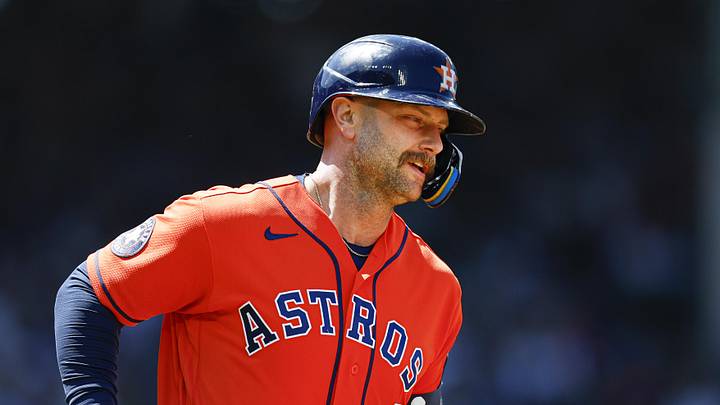
For the first time in a long time, the Houston Astros put together a strong series against a team with a pulse. While the Cubs aren't playing particularly well at the moment, neither are the Astros. So, when the Astros completed their sweep of Chicago on Sunday, it was a breath of fresh air. However, it also highlighted a key consideration heading into the trade deadline that could pose a real problem.
Everyone knows that the Astros have an uphill climb to recover from their 23-31 start to 2026, sweep or no sweep. The pitching staff is a mess of injuries, along with uncertainty, and the offense is inconsistent, old, and beat up. However, as we just saw, this is a team that has real talent, and they are slowly getting healthy again. So what should the front office do?
Well, that is precisely the problem. If the Astros don't make a commitment one way or another, they risk putting themselves in baseball purgatory ahead of the trade deadline, and that could be a disaster.
The Astros are going to have to make a clear choice at the trade deadline, because half-measures could be disastrous
There are merits to both of the "main" paths the Astros could take at the trade deadline. The most likely outcome, given how most of the season has gone, is that Houston sells at the deadline. It is hard to imagine that Jim Crane would authorize a total fire sale, but the Astros have a number of players who they probably would like to get off their payroll that may be of interest to contending teams.
On the other end of the spectrum, the Astros are kind of all-in right now. If they start winning baseball games, doubling down (within reason) may be the play. Again, this team is not getting any younger, nor are they likely to be able to keep the band together for much longer if previous Astros departures are any indication.
What can't happen is for Houston to fall into baseball purgatory. One of the worst things you can do as a baseball team when preparing for the future is to be in the middle. Winning brings playoff revenue and increased attention from prospective free agents and personnel. Losing brings the chance to trade away present assets for those that can help you more in the future, as well as a better draft position. Being in the middle, where you are kind of okay, gets a team all of the negatives and essentially none of the benefits.
Mediocrity is also what causes analysis paralysis at the trade deadline. Dana Brown may look down at a .500 Astros team and not want to commit to one path or another a week from the deadline. If that happens, all of the good trade targets are likely to disappear, and the buyers are going to dry up in a hurry. Unless Houston takes the correct (and decisive) action, the team may find itself looking around and hearing nothing but crickets once they actually settle on a plan.
 Add us as a preferred source on Google