%20%20--%3E%0A%3Csvg%20version%3D%221.1%22%20xmlns%3D%22http%3A%2F%2Fwww.w3.org%2F2000%2Fsvg%22%20xmlns%3Axlink%3D%22http%3A%2F%2Fwww.w3.org%2F1999%2Fxlink%22%20x%3D%220px%22%20y%3D%220px%22%0A%09%20viewBox%3D%220%200%201055.1%20200%22%20style%3D%22enable-background%3Anew%200%200%201055.1%20200%3B%22%20xml%3Aspace%3D%22preserve%22%3E%0A%3Cstyle%20type%3D%22text%2Fcss%22%3E%0A%09.st0%7Bfill%3A%23231F20%3B%7D%0A%09.st1%7Bfill%3A%230E203C%3B%7D%0A%09.st2%7Bfill%3A%23EC4324%3B%7D%0A%09.st3%7Bfill%3A%23FFFFFF%3B%7D%0A%3C%2Fstyle%3E%0A%3Cg%20id%3D%22Template%22%3E%0A%3C%2Fg%3E%0A%3Cg%20id%3D%22Layer_2%22%3E%0A%09%3Cpath%20class%3D%22st3%22%20d%3D%22M58.3%2C200.3h82.4c12.4%2C0%2C21.7-1.5%2C28-4.5c20.2-9.6%2C30.2-26.1%2C30.2-49.3c0-3.2-0.2-9.3-0.6-18.3h-65.1v14.9%0A%09%09c-0.9%2C3.9-3.4%2C5.8-7.5%2C5.8H73.2c-5%2C0-7.5-2.5-7.5-7.5V59.2c0-5%2C2.5-7.5%2C7.5-7.5h52.5c5%2C0%2C7.5%2C2.1%2C7.5%2C6.4v10.8h65.7V55.7%0A%09%09c0-16.3-3.8-28.3-11.4-36.1c-8.8-12.9-24.7-19.3-47.4-19.3H58.9C47%2C0.3%2C38%2C1.7%2C32%2C4.3c-21.3%2C9-32%2C26.1-32%2C51.4v88%0A%09%09c0%2C16.5%2C3.6%2C28.7%2C10.9%2C36.6C20.1%2C193.7%2C35.9%2C200.3%2C58.3%2C200.3z%22%2F%3E%0A%09%3Cpolygon%20class%3D%22st3%22%20points%3D%22596.6%2C64%20596.6%2C0.8%20400.1%2C0.8%20400.1%2C64%20442.7%2C64%20442.7%2C51.3%20466.1%2C51.3%20466.1%2C148.1%20442.1%2C148.1%20%0A%09%09442.1%2C199.9%20554.8%2C199.9%20554.8%2C148.1%20531.5%2C148.1%20531.5%2C51.4%20554.8%2C51.4%20554.8%2C64%20%09%22%2F%3E%0A%09%3Cpolygon%20class%3D%22st3%22%20points%3D%22942.4%2C148.5%20942.4%2C200.2%201055.1%2C200.2%201055.1%2C148.5%201031.8%2C148.5%201031.8%2C51.2%201055.1%2C51.2%201055.1%2C0.8%20%0A%09%09943.1%2C0.8%20943.1%2C51.3%20966.3%2C51.3%20966.3%2C80%20888.9%2C80%20888.9%2C51.3%20912.6%2C51.3%20912.6%2C0.5%20800.1%2C0.8%20800.1%2C51.4%20823.5%2C51.4%20823.5%2C148.6%20%0A%09%09800.1%2C148.6%20800.1%2C200.1%20912.6%2C200.1%20912.6%2C148.6%20888.9%2C148.6%20888.9%2C116.4%20966.3%2C116.4%20966.3%2C148.5%20%09%22%2F%3E%0A%09%3Cpolygon%20class%3D%22st2%22%20points%3D%22315.5%2C83.9%20299.6%2C34.9%20283.7%2C83.9%20232.2%2C83.9%20273.9%2C114.1%20258%2C163.1%20299.6%2C132.8%20341.3%2C163.1%20%0A%09%09325.4%2C114.1%20367%2C83.9%20%09%22%2F%3E%0A%09%3Cpolygon%20class%3D%22st2%22%20points%3D%22715.6%2C83.9%20699.7%2C34.9%20683.8%2C83.9%20632.3%2C83.9%20674%2C114.1%20658%2C163.1%20699.7%2C132.8%20741.3%2C163.1%20%0A%09%09725.4%2C114.1%20767.1%2C83.9%20%09%22%2F%3E%0A%3C%2Fg%3E%0A%3C%2Fsvg%3E%0A)

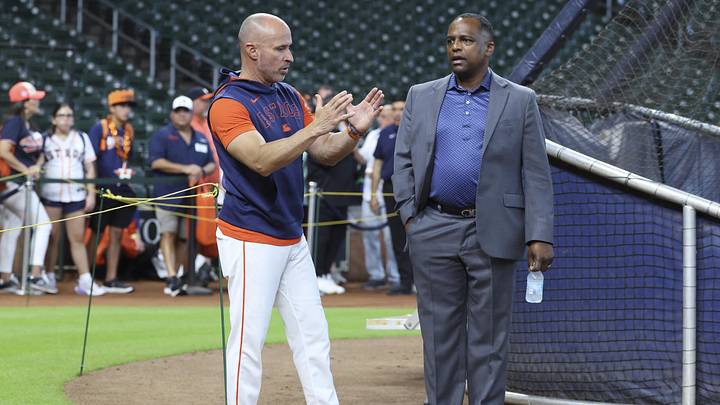
ESPN's Buster Olney rolled out his annual list of the front-office executives sweating the most this trade season, and tucked in at No. 10, Dana Brown is wedged between A.J. Preller’s annual shopping spree in San Diego and whatever it is Chris Young is doing in Texas. Olney summed up in two sentences so tidy it almost felt unfair.
In a year in which his contract is set to expire, Olney wrote that Brown has spent months navigating injury after injury. Now, the Houston Astros are close to being whole again, and the mediocre AL is helping to keep them in the mix. Then he posed the kicker as a question. Will Brown get the go-ahead to make moves? That’s the whole thing, really. The entire Houston season distilled into a single sentence that Brown himself probably can’t answer. Sometimes the national reports feel a little off. Sometimes they’re perfect.
There’s no way to sugarcoat it. Brown is a lame-duck general manager, which means he likely needs the 2026 Astros to rebound in a way that’s fast and visible to Jim Crane in order to keep his job. The team getting healthy could be a big part of that, but the cleanest way to do it is to buy ahead of the August 3 deadline. They need a left-handed bat and some bullpen help for sure, and that could give a flawed roster a real chance in a very weak playoff field. Brown hasn’t been shy about not selling, insisting there have been zero conversations about moving either of his two best trade pieces, Yordan Alvarez and Jeremy Peña.
Dana Brown’s trade deadline situation is the Astros’ 2026 in a nutshell
This is where it gets tricky because buying makes complete sense for Brown, because he’s trying to save his job. But the question that has to be asked is if it makes sense for the organization. The farm system is very thin. The big league core isn’t young. A GM who is fighting for his job as a lot of incentive to do whatever he can now because he may not be around in 2027. It’s a lot of the reason why most teams don’t let a manager or general manager get to a lame duck season.
And that doesn’t even get to the point that Olney mentioned, which is that it may not ultimately be Brown’s call. Crane runs a win-now operation, which is great for fans in many ways but isn’t always the best for the long term.
If you can call it optimism, the optimism in the ability to contend does start to wobble under the weight Even while being under .500 for most of the season, the Astros have always been within shouting distance of first place in their division and a Wild Card spot. That counts as “in it”, even though it’s more about the others than the Astros. The reinforcements are mostly back. Jose Altuve has returned. Josh Hader is healthy. Hunter Brown is back and pitched well in his return. On paper, the band is mostly back together.
But the plan is mostly vibes. The front office is betting almost everything on Hunter Brown’s return. He’s a great pitcher, and getting a Cy Young finalist back is a genuine upgrade, but he’s certainly not enough to be a band-aid for all the other flaws on this team. “Wait for the ace and let the schedule soften” is hope masquerading as a strategy. Maybe it works, but if it does, that’s fully putting results over process.
The reason that Brown isn’t totally a dead man walking is that Crane has never made an in-season move against a GM, and it does seem as if he views the injuries as extenuating circumstances. His last public comment on Brown’s status is that they’ll evaluate at the end of the year, which does sound like he’s getting a full-season audition. And, to Crane, winning absolves all sins. So if there’s a turnaround, Brown is going to get another year or more. The easy part is getting the chance, while the hard part is capitalizing on it with the bad farm system and aging roster.
So that’s it. That’s the catch-22 in full. Brown needs to win to stay. To win, he needs to make a deadline splash that the Astros don’t really have the pieces to pull off, and he may not be authorized to make. And the move that would probably put the Astros in the best long-term position is to sell, reset the system, and take some lumps. But that’s the one option that would likely cause Brown to lose his job. Like the team on the bases far too often, he’s in quite a pickle.
 Add us as a preferred source on Google