%20%20--%3E%0A%3Csvg%20version%3D%221.1%22%20xmlns%3D%22http%3A%2F%2Fwww.w3.org%2F2000%2Fsvg%22%20xmlns%3Axlink%3D%22http%3A%2F%2Fwww.w3.org%2F1999%2Fxlink%22%20x%3D%220px%22%20y%3D%220px%22%0A%09%20viewBox%3D%220%200%201055.1%20200%22%20style%3D%22enable-background%3Anew%200%200%201055.1%20200%3B%22%20xml%3Aspace%3D%22preserve%22%3E%0A%3Cstyle%20type%3D%22text%2Fcss%22%3E%0A%09.st0%7Bfill%3A%23231F20%3B%7D%0A%09.st1%7Bfill%3A%230E203C%3B%7D%0A%09.st2%7Bfill%3A%23EC4324%3B%7D%0A%09.st3%7Bfill%3A%23FFFFFF%3B%7D%0A%3C%2Fstyle%3E%0A%3Cg%20id%3D%22Template%22%3E%0A%3C%2Fg%3E%0A%3Cg%20id%3D%22Layer_2%22%3E%0A%09%3Cpath%20class%3D%22st3%22%20d%3D%22M58.3%2C200.3h82.4c12.4%2C0%2C21.7-1.5%2C28-4.5c20.2-9.6%2C30.2-26.1%2C30.2-49.3c0-3.2-0.2-9.3-0.6-18.3h-65.1v14.9%0A%09%09c-0.9%2C3.9-3.4%2C5.8-7.5%2C5.8H73.2c-5%2C0-7.5-2.5-7.5-7.5V59.2c0-5%2C2.5-7.5%2C7.5-7.5h52.5c5%2C0%2C7.5%2C2.1%2C7.5%2C6.4v10.8h65.7V55.7%0A%09%09c0-16.3-3.8-28.3-11.4-36.1c-8.8-12.9-24.7-19.3-47.4-19.3H58.9C47%2C0.3%2C38%2C1.7%2C32%2C4.3c-21.3%2C9-32%2C26.1-32%2C51.4v88%0A%09%09c0%2C16.5%2C3.6%2C28.7%2C10.9%2C36.6C20.1%2C193.7%2C35.9%2C200.3%2C58.3%2C200.3z%22%2F%3E%0A%09%3Cpolygon%20class%3D%22st3%22%20points%3D%22596.6%2C64%20596.6%2C0.8%20400.1%2C0.8%20400.1%2C64%20442.7%2C64%20442.7%2C51.3%20466.1%2C51.3%20466.1%2C148.1%20442.1%2C148.1%20%0A%09%09442.1%2C199.9%20554.8%2C199.9%20554.8%2C148.1%20531.5%2C148.1%20531.5%2C51.4%20554.8%2C51.4%20554.8%2C64%20%09%22%2F%3E%0A%09%3Cpolygon%20class%3D%22st3%22%20points%3D%22942.4%2C148.5%20942.4%2C200.2%201055.1%2C200.2%201055.1%2C148.5%201031.8%2C148.5%201031.8%2C51.2%201055.1%2C51.2%201055.1%2C0.8%20%0A%09%09943.1%2C0.8%20943.1%2C51.3%20966.3%2C51.3%20966.3%2C80%20888.9%2C80%20888.9%2C51.3%20912.6%2C51.3%20912.6%2C0.5%20800.1%2C0.8%20800.1%2C51.4%20823.5%2C51.4%20823.5%2C148.6%20%0A%09%09800.1%2C148.6%20800.1%2C200.1%20912.6%2C200.1%20912.6%2C148.6%20888.9%2C148.6%20888.9%2C116.4%20966.3%2C116.4%20966.3%2C148.5%20%09%22%2F%3E%0A%09%3Cpolygon%20class%3D%22st2%22%20points%3D%22315.5%2C83.9%20299.6%2C34.9%20283.7%2C83.9%20232.2%2C83.9%20273.9%2C114.1%20258%2C163.1%20299.6%2C132.8%20341.3%2C163.1%20%0A%09%09325.4%2C114.1%20367%2C83.9%20%09%22%2F%3E%0A%09%3Cpolygon%20class%3D%22st2%22%20points%3D%22715.6%2C83.9%20699.7%2C34.9%20683.8%2C83.9%20632.3%2C83.9%20674%2C114.1%20658%2C163.1%20699.7%2C132.8%20741.3%2C163.1%20%0A%09%09725.4%2C114.1%20767.1%2C83.9%20%09%22%2F%3E%0A%3C%2Fg%3E%0A%3C%2Fsvg%3E%0A)

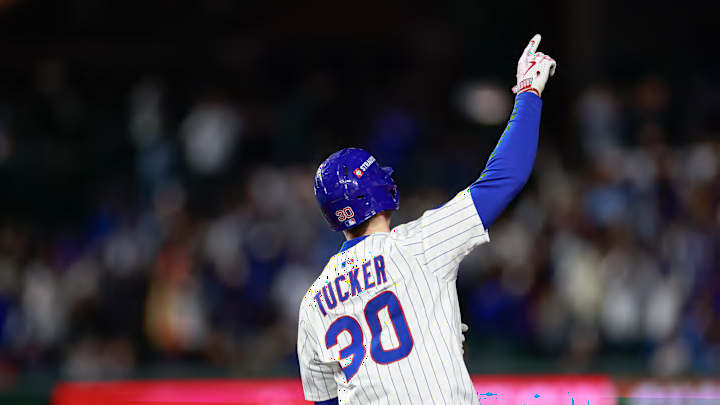
By trading Kyle Tucker last winter, the Houston Astros were trying to ensure they got maximum value for a star who was sure to depart this offseason. Despite Hayden Wesneski needing Tommy John surgery and Cam Smith's second-half struggles, it's clear the Astros made out well in that trade.
However, in doing so, they lost out on the chance to snatch a different consolation prize for Kyle Tucker. The deadline to extend qualifying offers to a team's own free agents is November 6. The Astros will be tagging Framber Valdez with one, but in an alternate reality where the club had held on to Tucker, they'd be extending one to him as well.
By trading Kyle Tucker last offseason, the Astros lost the chance at recouping a comp pick for him in free agency
Teams that lose players in free agency who rejected the qualifying offer are compensated for that loss with an additional draft pick, though the process of determining where that pick lands is complex. For the Astros, the value of that pick will depend on where the league's accounting office determines where they fall with regard to the luxury tax.
Depending on the source, the Astros were just under or just over the tax line, meaning that their comp pick would be as high as a pick after the completion of the second round, or as low as a pick after the fourth round.
That's a relatively big swing in terms of value, but for a team that has been light on draft picks for the last several years, due to signing their fair share of other clubs' qualifying offer free agents and the sign-stealing scandal penalties imposed on them, every pick matters as they look to rebuild a barren farm system.
The Astros will be receiving one for their inevitable loss of Framber Valdez, as well as a bonus pick after the first round, thanks to Hunter Brown's Cy Young nomination triggering an additional pick via the MLB's Prospect Promotion Incentive Program (PPI).
That will give the club a surplus of picks for the first time in a while, but it's worth considering what would've come to pass if the Astros had kept Tucker. Receiving yet another bonus draft pick would be a given, but having Tucker's bat in the lineup might have also staved off the Astros' late-season collapse.
While it would have been nice to have a productive lefty bat, something to club lacked outside of Yordan Alvarez, who was injured more often than not, it would have come at the cost of Isaac Paredes. Paredes posted a 128 wRC+ in 102 games, while Tucker recorded a 136 mark over 136 contests.
Would that slight difference, plus an extra month's worth of games played, have been enough to get Houston into the postseason? Maybe, but the value of Paredes plus Smith for the future likely outweighs the value that the additional comp pick would provide.
Still, it's a fun thought exercise. The motivation for the Astros trading Tucker when they did was to balance present contention with future viability, and it's worth kicking around the idea as to whether or not that was truly the best course of action now that we know how the 2025 season played out.
 Add us as a preferred source on Google