%20%20--%3E%0A%3Csvg%20version%3D%221.1%22%20xmlns%3D%22http%3A%2F%2Fwww.w3.org%2F2000%2Fsvg%22%20xmlns%3Axlink%3D%22http%3A%2F%2Fwww.w3.org%2F1999%2Fxlink%22%20x%3D%220px%22%20y%3D%220px%22%0A%09%20viewBox%3D%220%200%201055.1%20200%22%20style%3D%22enable-background%3Anew%200%200%201055.1%20200%3B%22%20xml%3Aspace%3D%22preserve%22%3E%0A%3Cstyle%20type%3D%22text%2Fcss%22%3E%0A%09.st0%7Bfill%3A%23231F20%3B%7D%0A%09.st1%7Bfill%3A%230E203C%3B%7D%0A%09.st2%7Bfill%3A%23EC4324%3B%7D%0A%09.st3%7Bfill%3A%23FFFFFF%3B%7D%0A%3C%2Fstyle%3E%0A%3Cg%20id%3D%22Template%22%3E%0A%3C%2Fg%3E%0A%3Cg%20id%3D%22Layer_2%22%3E%0A%09%3Cpath%20class%3D%22st3%22%20d%3D%22M58.3%2C200.3h82.4c12.4%2C0%2C21.7-1.5%2C28-4.5c20.2-9.6%2C30.2-26.1%2C30.2-49.3c0-3.2-0.2-9.3-0.6-18.3h-65.1v14.9%0A%09%09c-0.9%2C3.9-3.4%2C5.8-7.5%2C5.8H73.2c-5%2C0-7.5-2.5-7.5-7.5V59.2c0-5%2C2.5-7.5%2C7.5-7.5h52.5c5%2C0%2C7.5%2C2.1%2C7.5%2C6.4v10.8h65.7V55.7%0A%09%09c0-16.3-3.8-28.3-11.4-36.1c-8.8-12.9-24.7-19.3-47.4-19.3H58.9C47%2C0.3%2C38%2C1.7%2C32%2C4.3c-21.3%2C9-32%2C26.1-32%2C51.4v88%0A%09%09c0%2C16.5%2C3.6%2C28.7%2C10.9%2C36.6C20.1%2C193.7%2C35.9%2C200.3%2C58.3%2C200.3z%22%2F%3E%0A%09%3Cpolygon%20class%3D%22st3%22%20points%3D%22596.6%2C64%20596.6%2C0.8%20400.1%2C0.8%20400.1%2C64%20442.7%2C64%20442.7%2C51.3%20466.1%2C51.3%20466.1%2C148.1%20442.1%2C148.1%20%0A%09%09442.1%2C199.9%20554.8%2C199.9%20554.8%2C148.1%20531.5%2C148.1%20531.5%2C51.4%20554.8%2C51.4%20554.8%2C64%20%09%22%2F%3E%0A%09%3Cpolygon%20class%3D%22st3%22%20points%3D%22942.4%2C148.5%20942.4%2C200.2%201055.1%2C200.2%201055.1%2C148.5%201031.8%2C148.5%201031.8%2C51.2%201055.1%2C51.2%201055.1%2C0.8%20%0A%09%09943.1%2C0.8%20943.1%2C51.3%20966.3%2C51.3%20966.3%2C80%20888.9%2C80%20888.9%2C51.3%20912.6%2C51.3%20912.6%2C0.5%20800.1%2C0.8%20800.1%2C51.4%20823.5%2C51.4%20823.5%2C148.6%20%0A%09%09800.1%2C148.6%20800.1%2C200.1%20912.6%2C200.1%20912.6%2C148.6%20888.9%2C148.6%20888.9%2C116.4%20966.3%2C116.4%20966.3%2C148.5%20%09%22%2F%3E%0A%09%3Cpolygon%20class%3D%22st2%22%20points%3D%22315.5%2C83.9%20299.6%2C34.9%20283.7%2C83.9%20232.2%2C83.9%20273.9%2C114.1%20258%2C163.1%20299.6%2C132.8%20341.3%2C163.1%20%0A%09%09325.4%2C114.1%20367%2C83.9%20%09%22%2F%3E%0A%09%3Cpolygon%20class%3D%22st2%22%20points%3D%22715.6%2C83.9%20699.7%2C34.9%20683.8%2C83.9%20632.3%2C83.9%20674%2C114.1%20658%2C163.1%20699.7%2C132.8%20741.3%2C163.1%20%0A%09%09725.4%2C114.1%20767.1%2C83.9%20%09%22%2F%3E%0A%3C%2Fg%3E%0A%3C%2Fsvg%3E%0A)

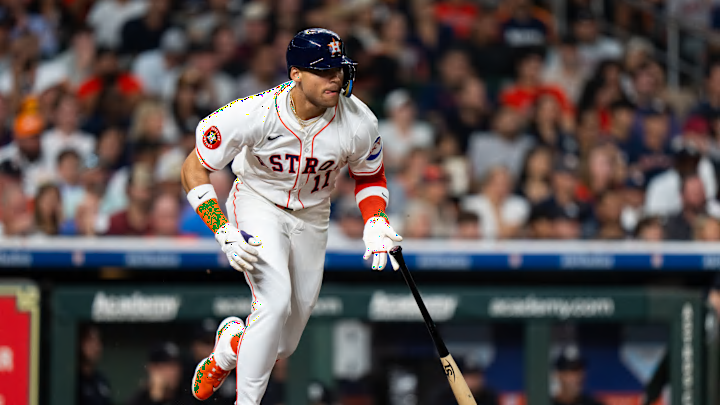
When the Houston Astros decided to carry Cam Smith on their Opening Day roster, they paved the way for the 22-year-old to make history, becoming the third fastest player to go from the draft to the majors, spending just 32 games in the minor leagues.
Houston was throwing a lot at their top prospect. Not only was he making the leap straight from Double-A, but they were also thrusting him into a new position. A third baseman by trade, Smith was moved to right field in order to accommodate the other prize of the Kyle Tucker trade, Isaac Paredes.
Early struggles were expected, but quickly it seemed as if Smith was (mostly) hitting his stride. Perhaps most impressive was how quickly he looked comfortable in right field, tapping into his supreme athleticism to turn in some shockingly good defense.
Cam Smith's utilization down the stretch proves the Astros moved too quickly to promote him
By July, though the book was out on Smith, and as pitchers learned how to attack him. He spiraled further and further into a slump, partially prompting the Astros to acquire outfielder Jesus Sanchez at the trade deadline. Now, the way the Astros are utilizing him proves that they jumped the gun.
In recent games, Smith has been plastered to the bench more often than he's been roaming right field. The rookie isn't facing right-handed pitchers and has often been used as a pinch hitter, coming in to save the lefty-swinging Sanchez against tough lefty relievers.
Speaking with The Athletic (subscription required), manager Joe Espada said, "He understands his role, facing a little bit more lefties, so he can narrow his search and study on certain guys. He’s done a really nice job.” He'd add, “Looking forward, I think he’s an everyday player. We’re just trying to manage his workload and his development.”
Espada is right, but there's your admission. Whether it was poor planning, an intense desire to prove the Tucker trade was an instant success, or a combination of the two, the Astros now realize that the youngster wasn't ready for the gargantuan leap.
Smith's long-term outlook might still be fine, but promoting prospects before they're ready is a dangerous game, and one that can burn both the general manager and the prospect's future should the struggles shatter his confidence.
Hopefully, that's not the case for Smith, who by all accounts seems to be taking things in stride. Still, it's apparent that he'd have been better off getting regular at-bats and likely thriving down at Double-A Corpus Christi, rather than struggling against big league pitching and then withering away on the bench in the heat of the playoff chase.
More Houston Astros News and Rumors
 Add us as a preferred source on Google