%20%20--%3E%0A%3Csvg%20version%3D%221.1%22%20xmlns%3D%22http%3A%2F%2Fwww.w3.org%2F2000%2Fsvg%22%20xmlns%3Axlink%3D%22http%3A%2F%2Fwww.w3.org%2F1999%2Fxlink%22%20x%3D%220px%22%20y%3D%220px%22%0A%09%20viewBox%3D%220%200%201055.1%20200%22%20style%3D%22enable-background%3Anew%200%200%201055.1%20200%3B%22%20xml%3Aspace%3D%22preserve%22%3E%0A%3Cstyle%20type%3D%22text%2Fcss%22%3E%0A%09.st0%7Bfill%3A%23231F20%3B%7D%0A%09.st1%7Bfill%3A%230E203C%3B%7D%0A%09.st2%7Bfill%3A%23EC4324%3B%7D%0A%09.st3%7Bfill%3A%23FFFFFF%3B%7D%0A%3C%2Fstyle%3E%0A%3Cg%20id%3D%22Template%22%3E%0A%3C%2Fg%3E%0A%3Cg%20id%3D%22Layer_2%22%3E%0A%09%3Cpath%20class%3D%22st3%22%20d%3D%22M58.3%2C200.3h82.4c12.4%2C0%2C21.7-1.5%2C28-4.5c20.2-9.6%2C30.2-26.1%2C30.2-49.3c0-3.2-0.2-9.3-0.6-18.3h-65.1v14.9%0A%09%09c-0.9%2C3.9-3.4%2C5.8-7.5%2C5.8H73.2c-5%2C0-7.5-2.5-7.5-7.5V59.2c0-5%2C2.5-7.5%2C7.5-7.5h52.5c5%2C0%2C7.5%2C2.1%2C7.5%2C6.4v10.8h65.7V55.7%0A%09%09c0-16.3-3.8-28.3-11.4-36.1c-8.8-12.9-24.7-19.3-47.4-19.3H58.9C47%2C0.3%2C38%2C1.7%2C32%2C4.3c-21.3%2C9-32%2C26.1-32%2C51.4v88%0A%09%09c0%2C16.5%2C3.6%2C28.7%2C10.9%2C36.6C20.1%2C193.7%2C35.9%2C200.3%2C58.3%2C200.3z%22%2F%3E%0A%09%3Cpolygon%20class%3D%22st3%22%20points%3D%22596.6%2C64%20596.6%2C0.8%20400.1%2C0.8%20400.1%2C64%20442.7%2C64%20442.7%2C51.3%20466.1%2C51.3%20466.1%2C148.1%20442.1%2C148.1%20%0A%09%09442.1%2C199.9%20554.8%2C199.9%20554.8%2C148.1%20531.5%2C148.1%20531.5%2C51.4%20554.8%2C51.4%20554.8%2C64%20%09%22%2F%3E%0A%09%3Cpolygon%20class%3D%22st3%22%20points%3D%22942.4%2C148.5%20942.4%2C200.2%201055.1%2C200.2%201055.1%2C148.5%201031.8%2C148.5%201031.8%2C51.2%201055.1%2C51.2%201055.1%2C0.8%20%0A%09%09943.1%2C0.8%20943.1%2C51.3%20966.3%2C51.3%20966.3%2C80%20888.9%2C80%20888.9%2C51.3%20912.6%2C51.3%20912.6%2C0.5%20800.1%2C0.8%20800.1%2C51.4%20823.5%2C51.4%20823.5%2C148.6%20%0A%09%09800.1%2C148.6%20800.1%2C200.1%20912.6%2C200.1%20912.6%2C148.6%20888.9%2C148.6%20888.9%2C116.4%20966.3%2C116.4%20966.3%2C148.5%20%09%22%2F%3E%0A%09%3Cpolygon%20class%3D%22st2%22%20points%3D%22315.5%2C83.9%20299.6%2C34.9%20283.7%2C83.9%20232.2%2C83.9%20273.9%2C114.1%20258%2C163.1%20299.6%2C132.8%20341.3%2C163.1%20%0A%09%09325.4%2C114.1%20367%2C83.9%20%09%22%2F%3E%0A%09%3Cpolygon%20class%3D%22st2%22%20points%3D%22715.6%2C83.9%20699.7%2C34.9%20683.8%2C83.9%20632.3%2C83.9%20674%2C114.1%20658%2C163.1%20699.7%2C132.8%20741.3%2C163.1%20%0A%09%09725.4%2C114.1%20767.1%2C83.9%20%09%22%2F%3E%0A%3C%2Fg%3E%0A%3C%2Fsvg%3E%0A)

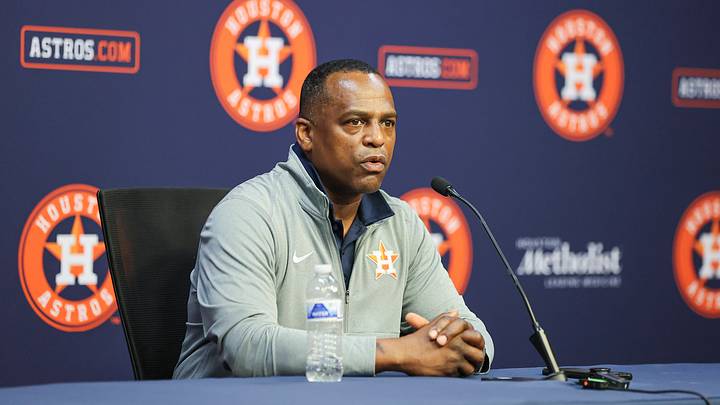
Jim Crane has moved on from general managers before, but he’s never fired one quite like this. The official word is that Dana Brown and the Houston Astros “mutually agreed to part ways”, but we all know what that really means. Brown was let go, and the timing makes very little strategic sense.
The Astros are certainly not a good team. You can’t say a team under .500 as we inch toward September is good. But they are a first place team, as of the end of the weekend. And they are 10 games over .500 since their low-water mark of the season of 19-30. They clawed back into contention and to the top of the division. Of course, they also just fell below .500 for the first time since July 28 with two straight losses to the lowly A’s. There are layers.
None of this is new information. What’s new is that Crane decided to wait until three weeks after the trade deadline and six weeks after the draft. But five weeks before the end of the season. This is all very curious and should bother Astros fans more than the firing itself.
Jim Crane seemed to be out on Dana Brown long before now, but are the Astros better off?
All indications pointed to this being the end result for a while, but if Crane made that decision weeks ago, the trade deadline was the moment to act, not August 24. Brown ran the entire deadline (sort of), ultimately making just one trade of note. He sent Spencer Arrighetti to Toronto for Daulton Varsho, which wasn’t the best-regarded trade the team has ever made.
Varsho came in to fix an outfield that needed a fix, and he has arguably made the problem worse. All this while, Arrighetti could have been useful for a team desperately trying to find competent starting pitching. But let’s argue that this trade was the final straw. Why wait another three weeks to make a move? If it wasn’t, what changed between then and now that he didn’t already know?
The draft is a similar story. The scouting director is far more in charge of the draft than the GM, but the buck stops with Brown on that too. He was in charge of two first-round picks and a sizable bonus pool. He oversaw the picks made to help improve a farm system that was low on talent. Now, whoever is brought in will be working with someone else’s draft picks, which is not generally a best practice.
Letting a GM run two very consequential events and firing him so quickly is not how a front office signals stability to a fan base or potential candidates. This isn’t new for Crane either. When James Click didn’t want to accept subpar terms, ownership moved on from him after a World Series parade. It was clear Brown was drifting toward the same outcome.
He didn’t deliver a title, but they did win the division twice and reach Game Seven of the ALCS within his first two years, before the previous regime’s draft misses and rough player development caught up with them over the past two years. There’s only so much cover for bad depth, and even with that, the Astros won 87 games in 2025.
For now, Crane will personally oversee baseball operations during the transition. Assistant GMs Charles Cook, Gavin Dickey, and Connor Huff will split up Brown’s remaining duties in conjunction with senior advisor Jeff Bagwell. Other than basic roster maneuvers and sorting through DFAs and released players, the GM role isn’t quite as vital at this point in the year, but that sure is a lot of cooks in the kitchen when trying to win a division. It's easy to question why Crane didn't make the move earlier, but once he didn't, why make it now instead of waiting until the end of the season?
Crane thanked Brown for the scouting, draft, and development work and is now trusting a committee to finish it without him. That’s something.
None of this is to say that Brown was above criticism. It’s a results business, and the results weren’t getting better. They haven’t had a real breakthrough in player development in quite some time. The farm system continues to rate poorly. Brown was not a perfect GM who deserved a better fate.
But if the plan was always to move on, the time to do it was before entrusting him with the two most important events of a season for a GM. It was before he oversaw a $13.7 million draft bonus pool. It was before he traded away a pitcher for a fourth outfielder whom he refused to include to acquire Dylan Cease a year earlier. If we’re being honest, Crane got the aggressive part of the decision right, but the timing was all wrong.
 Add us as a preferred source on Google