%20%20--%3E%0A%3Csvg%20version%3D%221.1%22%20xmlns%3D%22http%3A%2F%2Fwww.w3.org%2F2000%2Fsvg%22%20xmlns%3Axlink%3D%22http%3A%2F%2Fwww.w3.org%2F1999%2Fxlink%22%20x%3D%220px%22%20y%3D%220px%22%0A%09%20viewBox%3D%220%200%201055.1%20200%22%20style%3D%22enable-background%3Anew%200%200%201055.1%20200%3B%22%20xml%3Aspace%3D%22preserve%22%3E%0A%3Cstyle%20type%3D%22text%2Fcss%22%3E%0A%09.st0%7Bfill%3A%23231F20%3B%7D%0A%09.st1%7Bfill%3A%230E203C%3B%7D%0A%09.st2%7Bfill%3A%23EC4324%3B%7D%0A%09.st3%7Bfill%3A%23FFFFFF%3B%7D%0A%3C%2Fstyle%3E%0A%3Cg%20id%3D%22Template%22%3E%0A%3C%2Fg%3E%0A%3Cg%20id%3D%22Layer_2%22%3E%0A%09%3Cpath%20class%3D%22st3%22%20d%3D%22M58.3%2C200.3h82.4c12.4%2C0%2C21.7-1.5%2C28-4.5c20.2-9.6%2C30.2-26.1%2C30.2-49.3c0-3.2-0.2-9.3-0.6-18.3h-65.1v14.9%0A%09%09c-0.9%2C3.9-3.4%2C5.8-7.5%2C5.8H73.2c-5%2C0-7.5-2.5-7.5-7.5V59.2c0-5%2C2.5-7.5%2C7.5-7.5h52.5c5%2C0%2C7.5%2C2.1%2C7.5%2C6.4v10.8h65.7V55.7%0A%09%09c0-16.3-3.8-28.3-11.4-36.1c-8.8-12.9-24.7-19.3-47.4-19.3H58.9C47%2C0.3%2C38%2C1.7%2C32%2C4.3c-21.3%2C9-32%2C26.1-32%2C51.4v88%0A%09%09c0%2C16.5%2C3.6%2C28.7%2C10.9%2C36.6C20.1%2C193.7%2C35.9%2C200.3%2C58.3%2C200.3z%22%2F%3E%0A%09%3Cpolygon%20class%3D%22st3%22%20points%3D%22596.6%2C64%20596.6%2C0.8%20400.1%2C0.8%20400.1%2C64%20442.7%2C64%20442.7%2C51.3%20466.1%2C51.3%20466.1%2C148.1%20442.1%2C148.1%20%0A%09%09442.1%2C199.9%20554.8%2C199.9%20554.8%2C148.1%20531.5%2C148.1%20531.5%2C51.4%20554.8%2C51.4%20554.8%2C64%20%09%22%2F%3E%0A%09%3Cpolygon%20class%3D%22st3%22%20points%3D%22942.4%2C148.5%20942.4%2C200.2%201055.1%2C200.2%201055.1%2C148.5%201031.8%2C148.5%201031.8%2C51.2%201055.1%2C51.2%201055.1%2C0.8%20%0A%09%09943.1%2C0.8%20943.1%2C51.3%20966.3%2C51.3%20966.3%2C80%20888.9%2C80%20888.9%2C51.3%20912.6%2C51.3%20912.6%2C0.5%20800.1%2C0.8%20800.1%2C51.4%20823.5%2C51.4%20823.5%2C148.6%20%0A%09%09800.1%2C148.6%20800.1%2C200.1%20912.6%2C200.1%20912.6%2C148.6%20888.9%2C148.6%20888.9%2C116.4%20966.3%2C116.4%20966.3%2C148.5%20%09%22%2F%3E%0A%09%3Cpolygon%20class%3D%22st2%22%20points%3D%22315.5%2C83.9%20299.6%2C34.9%20283.7%2C83.9%20232.2%2C83.9%20273.9%2C114.1%20258%2C163.1%20299.6%2C132.8%20341.3%2C163.1%20%0A%09%09325.4%2C114.1%20367%2C83.9%20%09%22%2F%3E%0A%09%3Cpolygon%20class%3D%22st2%22%20points%3D%22715.6%2C83.9%20699.7%2C34.9%20683.8%2C83.9%20632.3%2C83.9%20674%2C114.1%20658%2C163.1%20699.7%2C132.8%20741.3%2C163.1%20%0A%09%09725.4%2C114.1%20767.1%2C83.9%20%09%22%2F%3E%0A%3C%2Fg%3E%0A%3C%2Fsvg%3E%0A)

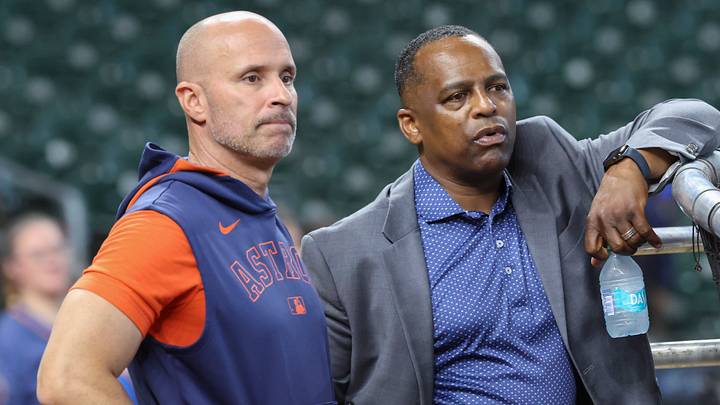
The Houston Astros are right where Dana Brown needs them to be. Coming into play Thursday, the Astros were 59-57 and atop the American League West after a long climb to the top. They’re clinging to a division lead in a year with real questions about the roster. The record isn’t good enough, but after the start they had, you can’t argue anything other than that Brown is doing his job.
And it probably won’t matter. Not to Jim Crane, at least, who happens to be the one person to whom it absolutely needs to matter.
A title wasn't enough to save James Click before Dana Brown's arrival, and history may repeat itself
This story has been told before in Houston, but atop an even bigger mountain than a division. James Click ran the front office for three seasons, and made the playoffs in every one of them. His teams reached the World Series in consecutive seasons, and delivered the second-most wins in franchise history in 2022 on the way to winning the World Series.
Six days after that title, Click and the Astros parted ways because he wouldn’t take a one-year offer from an owner who already knew exactly how much rope he wanted to extend. They won 106 games and had a parade, and that didn’t buy Click a long-term deal. It’s still mind-boggling.
With Click’s departure, the Astros brought in Brown, who is now walking the same tightrope with similar signs. Crane confirmed before the season that there hadn’t been any extension talks with Brown or his manager, Joe Espada. Both are currently working on the final year of their original contracts. Crane made it clear that he wasn’t planning to change that either.
“I think we’ll go through this year like we also do, evaluate it, and then make the decision at the end of the year,” Crane said. That’s the kind of quote that sounds patient until you think back to the Click era.
If Brown was being evaluated on the trade deadline, he probably didn’t help his case. Houston acquired Daulton Varsho and not much else of consequence. Brown’s explanation for standing pat on pitching was that the returns of Ronel Blanco and Hayden Wesneski basically counted as trade acquisitions. That sure sounds like Brown was scrambling to defend his own inactivity. Blanco has not been good in any of his three starts back. That’s not a trade deadline pickup. It’s a problem Brown didn’t solve.
Beyond what Brown did or didn’t do, what happened behind the scenes was more telling. Crane reportedly put the kibosh on a nearly finished deal that would have sent Bryan Abreu to Minnesota for Trevor Larnach, a lefty outfield bat they had discussed. It wasn’t a glamorous deal or anything, but it was a sensible one that would have solved at least one of Houston’s roster issues. When an owner is personally vetoing his GM’s deals, that’s not what you’d call a healthy dynamic.
Rival executives told USA Today’s Bob Nightengale before the deadline that they believed Crane had already made up his mind on Brown, according to a report circulating well before a single move was even made. If that’s accurate, then that means nothing Brown and the Astros could do down the stretch would change the outcome. That’s where Click was three years ago, except at least Click got to raise the big trophy first.
This doesn’t mean Brown is bad at his job (it doesn’t mean he isn’t either). He inherited a roster carrying a lot of the scars of Crane’s own free agent missteps, and he’s generally steadied the ship since. But that’s not what the bar has become in Houston. Click met the highest possible bar and was still shown the door. Being in first place in August in a mediocre-at-best AL West isn’t going to convince Crane to give Brown a multi-year commitment he’s never shown any interest in discussing.
For years, Astros’ fans have watched this franchise treat championships as the price of admission rather than a security blanket. Getting back to first place after a terrible start doesn’t change any of that. It just means that his ending will likely look pretty similar to the last one.
 Add us as a preferred source on Google