%20%20--%3E%0A%3Csvg%20version%3D%221.1%22%20xmlns%3D%22http%3A%2F%2Fwww.w3.org%2F2000%2Fsvg%22%20xmlns%3Axlink%3D%22http%3A%2F%2Fwww.w3.org%2F1999%2Fxlink%22%20x%3D%220px%22%20y%3D%220px%22%0A%09%20viewBox%3D%220%200%201055.1%20200%22%20style%3D%22enable-background%3Anew%200%200%201055.1%20200%3B%22%20xml%3Aspace%3D%22preserve%22%3E%0A%3Cstyle%20type%3D%22text%2Fcss%22%3E%0A%09.st0%7Bfill%3A%23231F20%3B%7D%0A%09.st1%7Bfill%3A%230E203C%3B%7D%0A%09.st2%7Bfill%3A%23EC4324%3B%7D%0A%09.st3%7Bfill%3A%23FFFFFF%3B%7D%0A%3C%2Fstyle%3E%0A%3Cg%20id%3D%22Template%22%3E%0A%3C%2Fg%3E%0A%3Cg%20id%3D%22Layer_2%22%3E%0A%09%3Cpath%20class%3D%22st3%22%20d%3D%22M58.3%2C200.3h82.4c12.4%2C0%2C21.7-1.5%2C28-4.5c20.2-9.6%2C30.2-26.1%2C30.2-49.3c0-3.2-0.2-9.3-0.6-18.3h-65.1v14.9%0A%09%09c-0.9%2C3.9-3.4%2C5.8-7.5%2C5.8H73.2c-5%2C0-7.5-2.5-7.5-7.5V59.2c0-5%2C2.5-7.5%2C7.5-7.5h52.5c5%2C0%2C7.5%2C2.1%2C7.5%2C6.4v10.8h65.7V55.7%0A%09%09c0-16.3-3.8-28.3-11.4-36.1c-8.8-12.9-24.7-19.3-47.4-19.3H58.9C47%2C0.3%2C38%2C1.7%2C32%2C4.3c-21.3%2C9-32%2C26.1-32%2C51.4v88%0A%09%09c0%2C16.5%2C3.6%2C28.7%2C10.9%2C36.6C20.1%2C193.7%2C35.9%2C200.3%2C58.3%2C200.3z%22%2F%3E%0A%09%3Cpolygon%20class%3D%22st3%22%20points%3D%22596.6%2C64%20596.6%2C0.8%20400.1%2C0.8%20400.1%2C64%20442.7%2C64%20442.7%2C51.3%20466.1%2C51.3%20466.1%2C148.1%20442.1%2C148.1%20%0A%09%09442.1%2C199.9%20554.8%2C199.9%20554.8%2C148.1%20531.5%2C148.1%20531.5%2C51.4%20554.8%2C51.4%20554.8%2C64%20%09%22%2F%3E%0A%09%3Cpolygon%20class%3D%22st3%22%20points%3D%22942.4%2C148.5%20942.4%2C200.2%201055.1%2C200.2%201055.1%2C148.5%201031.8%2C148.5%201031.8%2C51.2%201055.1%2C51.2%201055.1%2C0.8%20%0A%09%09943.1%2C0.8%20943.1%2C51.3%20966.3%2C51.3%20966.3%2C80%20888.9%2C80%20888.9%2C51.3%20912.6%2C51.3%20912.6%2C0.5%20800.1%2C0.8%20800.1%2C51.4%20823.5%2C51.4%20823.5%2C148.6%20%0A%09%09800.1%2C148.6%20800.1%2C200.1%20912.6%2C200.1%20912.6%2C148.6%20888.9%2C148.6%20888.9%2C116.4%20966.3%2C116.4%20966.3%2C148.5%20%09%22%2F%3E%0A%09%3Cpolygon%20class%3D%22st2%22%20points%3D%22315.5%2C83.9%20299.6%2C34.9%20283.7%2C83.9%20232.2%2C83.9%20273.9%2C114.1%20258%2C163.1%20299.6%2C132.8%20341.3%2C163.1%20%0A%09%09325.4%2C114.1%20367%2C83.9%20%09%22%2F%3E%0A%09%3Cpolygon%20class%3D%22st2%22%20points%3D%22715.6%2C83.9%20699.7%2C34.9%20683.8%2C83.9%20632.3%2C83.9%20674%2C114.1%20658%2C163.1%20699.7%2C132.8%20741.3%2C163.1%20%0A%09%09725.4%2C114.1%20767.1%2C83.9%20%09%22%2F%3E%0A%3C%2Fg%3E%0A%3C%2Fsvg%3E%0A)

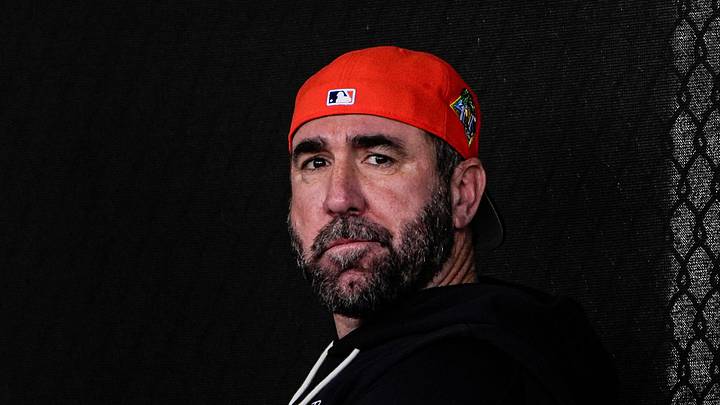
The laws of physics and aging are not kind to baseball players' bodies. Former Houston Astros ace Justin Verlander looked like he was going to be one of the exceptions to that rule. He won his last (and likely final) Cy Young at 39 years old, and he was good enough the next season for Houston to go out and swing a massive trade to bring him back to the Astros. Unfortunately, things have (mostly) gone downhill since then, and his current tenure with the Tigers has revealed a new low for the future Hall of Famer.
Verlander pitched for the Giants in 2025, and while his 3.85 ERA across 152 innings wasn't great, it wasn't terrible and was almost certainly aided by the fact that San Francisco is notoriously pitcher-friendly. Nevertheless, Verlander successfully navigated another season with diminished stuff after his second stint with the Astros ended with a whimper.
Unfortunately, it looks like time has finally run out on Verlander. After experiencing another setback on his road back to Detroit following a hip injury, Verlander is openly musing about retirement. It would be an unfortunate end to a fantastic career if this is truly the ending, but it would also be a brutal reminder of how much it cost the Astros to bring the all-time great back.
True twilight of Justin Verlander's career began with the Astros, and it cost Houston far too much in hindsight
Look, you won't find many Astros fans who were unhappy with the team's decision to go out and strike a trade for Verlander at the 2023 deadline. Verlander won a pair of Cy Youngs in Houston, and while he showed signs of decline with New York, he was still getting decent results. He was also pretty good after the trade, with a 3.31 ERA in 11 starts for the Astros that season.
However, 2024 was a season that saw Verlander beset by injuries and ineffectiveness while posting the worst season of his career. Just like that, the Astros had given up top prospects Drew Gilbert and Ryan Clifford for a decent half season and one bad one while also paying Verlander millions (although the Mets DID pick up $35 million of the remaining $58 million on his contract at least). Even though neither Gilbert nor Clifford have amounted to much in the majors, they had real value at the time, and Houston didn't have the chance to, at minimum, use them as trade chips in another, better deal that could have set them up better for the future.
Again, this is the risk you take when you find a great player way past their prime. You can acknowledge their former greatness while accepting that they are not worth the risk to keep around past their expiration date. It is a lesson the Tigers are learning right now and one that the Astros learned far too late.
 Add us as a preferred source on Google