%20%20--%3E%0A%3Csvg%20version%3D%221.1%22%20xmlns%3D%22http%3A%2F%2Fwww.w3.org%2F2000%2Fsvg%22%20xmlns%3Axlink%3D%22http%3A%2F%2Fwww.w3.org%2F1999%2Fxlink%22%20x%3D%220px%22%20y%3D%220px%22%0A%09%20viewBox%3D%220%200%201055.1%20200%22%20style%3D%22enable-background%3Anew%200%200%201055.1%20200%3B%22%20xml%3Aspace%3D%22preserve%22%3E%0A%3Cstyle%20type%3D%22text%2Fcss%22%3E%0A%09.st0%7Bfill%3A%23231F20%3B%7D%0A%09.st1%7Bfill%3A%230E203C%3B%7D%0A%09.st2%7Bfill%3A%23EC4324%3B%7D%0A%09.st3%7Bfill%3A%23FFFFFF%3B%7D%0A%3C%2Fstyle%3E%0A%3Cg%20id%3D%22Template%22%3E%0A%3C%2Fg%3E%0A%3Cg%20id%3D%22Layer_2%22%3E%0A%09%3Cpath%20class%3D%22st3%22%20d%3D%22M58.3%2C200.3h82.4c12.4%2C0%2C21.7-1.5%2C28-4.5c20.2-9.6%2C30.2-26.1%2C30.2-49.3c0-3.2-0.2-9.3-0.6-18.3h-65.1v14.9%0A%09%09c-0.9%2C3.9-3.4%2C5.8-7.5%2C5.8H73.2c-5%2C0-7.5-2.5-7.5-7.5V59.2c0-5%2C2.5-7.5%2C7.5-7.5h52.5c5%2C0%2C7.5%2C2.1%2C7.5%2C6.4v10.8h65.7V55.7%0A%09%09c0-16.3-3.8-28.3-11.4-36.1c-8.8-12.9-24.7-19.3-47.4-19.3H58.9C47%2C0.3%2C38%2C1.7%2C32%2C4.3c-21.3%2C9-32%2C26.1-32%2C51.4v88%0A%09%09c0%2C16.5%2C3.6%2C28.7%2C10.9%2C36.6C20.1%2C193.7%2C35.9%2C200.3%2C58.3%2C200.3z%22%2F%3E%0A%09%3Cpolygon%20class%3D%22st3%22%20points%3D%22596.6%2C64%20596.6%2C0.8%20400.1%2C0.8%20400.1%2C64%20442.7%2C64%20442.7%2C51.3%20466.1%2C51.3%20466.1%2C148.1%20442.1%2C148.1%20%0A%09%09442.1%2C199.9%20554.8%2C199.9%20554.8%2C148.1%20531.5%2C148.1%20531.5%2C51.4%20554.8%2C51.4%20554.8%2C64%20%09%22%2F%3E%0A%09%3Cpolygon%20class%3D%22st3%22%20points%3D%22942.4%2C148.5%20942.4%2C200.2%201055.1%2C200.2%201055.1%2C148.5%201031.8%2C148.5%201031.8%2C51.2%201055.1%2C51.2%201055.1%2C0.8%20%0A%09%09943.1%2C0.8%20943.1%2C51.3%20966.3%2C51.3%20966.3%2C80%20888.9%2C80%20888.9%2C51.3%20912.6%2C51.3%20912.6%2C0.5%20800.1%2C0.8%20800.1%2C51.4%20823.5%2C51.4%20823.5%2C148.6%20%0A%09%09800.1%2C148.6%20800.1%2C200.1%20912.6%2C200.1%20912.6%2C148.6%20888.9%2C148.6%20888.9%2C116.4%20966.3%2C116.4%20966.3%2C148.5%20%09%22%2F%3E%0A%09%3Cpolygon%20class%3D%22st2%22%20points%3D%22315.5%2C83.9%20299.6%2C34.9%20283.7%2C83.9%20232.2%2C83.9%20273.9%2C114.1%20258%2C163.1%20299.6%2C132.8%20341.3%2C163.1%20%0A%09%09325.4%2C114.1%20367%2C83.9%20%09%22%2F%3E%0A%09%3Cpolygon%20class%3D%22st2%22%20points%3D%22715.6%2C83.9%20699.7%2C34.9%20683.8%2C83.9%20632.3%2C83.9%20674%2C114.1%20658%2C163.1%20699.7%2C132.8%20741.3%2C163.1%20%0A%09%09725.4%2C114.1%20767.1%2C83.9%20%09%22%2F%3E%0A%3C%2Fg%3E%0A%3C%2Fsvg%3E%0A)

Take a look at the projected rotation for the Houston Astros in 2027 before any moves are made, and you’ll notice a pattern. Hunter Brown, Cristian Javier, Hayden Wesneski, Peter Lambert, Mike Burrows, Ronel Blanco, and Tatsuya Imai all have something in common. They’re all right-handed and part of a group that badly needs rebuilding.
Houston never really replaced Framber Valdez. The organization just hoped that nobody would notice that opposing lineups were the same every single night. Now Randy Flores has a long list to sort through and a rotation that needs a lefty. The market has a splashy fix, but there’s also an interesting 31-year-old who might be the best option once you factor everything in.
Foster Griffin's All-Star breakout and Cleveland fade make him a free-agent bargain
Griffin's story is fascinating. The Royals took him in the first round in 2014. He made his big league debut and got the win on his birthday in 2020. Then he had Tommy John Surgery and didn’t pitch again until 2022 before eventually heading to Japan. In three years in Japan, he posted a 2.57 ERA with a reworked arsenal. The Nationals took notice and took a $5.5 million flyer on him last winter. By July, he was an All-Star
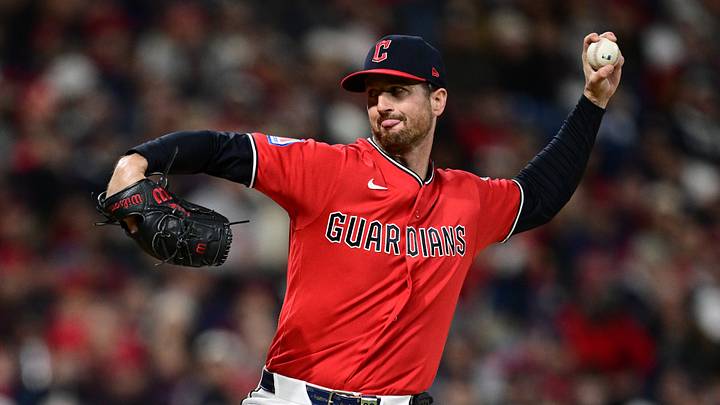
The Nationals cashed in and traded him at the deadline with a 12-3 record and 3.06 ERA in 22 starts. Things went a bit sideways for Griffin with the Guardians on the surface, with a 5.19 ERA and 1.62 WHIP in 43.1 innings, but his FIP was actually better in Cleveland (though his xERA was far higher too).
Is he the guy who excelled in Japan and pitched well for the Nationals or the one who struggled in Cleveland? He’s probably neither and both. In total, he went 15-6 with a 3.60 ERA in 172.2 innings with a reasonable strikeout rate and a very good walk rate. That’s a legitimate mid-rotation starter. Lambert led the Astros in 2026 with 155.2 innings. Griffin bested that by 17 innings. That’s not nothing.
The peripherals in Cleveland led to an improved FIP. He struck out 42 and walked 15 in 43.1 innings there. The strikeouts actually ticked up, though he was easier to hit. More balls found the grass, but there’s also a world where that has much more to do with a sudden change in situation than a sudden change in ability.
That fade is also a positive, at least when it comes to affordability and what the Astros are looking to do. If he’d finished the year looking like the guy he was with the Nationals, he’d likely be priced based on a qualifying offer, even though he wouldn’t have been eligible to receive one. Instead, he’s a guy with a little more than a half-season of All-Star work and a pretty shaky finish. That usually lands a pitcher a reasonable multi-year deal instead of a monster one. And since he wasn’t eligible for a qualifying offer, signing him doesn’t cost a draft pick.
All that said, Griffin may not be a great fit for Daikin Park. He isn’t Valdez, who could live at the bottom of the zone and let ground balls do the work. That’s how a lefty survives the Crawford Boxes down the left field line. Griffin doesn’t throw hard and doesn’t pound the ground. Instead, he wins by spinning a deep mix of pitches and making hitters guess. When that goes wrong, it can go in the air. And, against a righty, it can go in the air pull-side, which can be dangerous in Houston.
While pitching in less hitter-friendly parks, Griffin allowed 23 home runs, with 16 coming from righties. A right-handed hitter pulling a hung sweeper in Houston doesn’t need to hit it especially hard or far to put it in the seats. So he will give up some home runs in that park.
The question is if everything else outweighs it. Pitchers can give up home runs and still be successful. Griffin throws strikes and showed he can pitch a full starter’s workload. A rotation that spent 2026 patching holes with castoffs and rehab assignments needs some of that stability. Being a lefty is a bonus because the Astros just don’t have one.
Flores came from an organization built on finding value where other teams didn’t want to look. Griffin, even with his very good 2026, is still that kind of player. He didn’t make it in his first go-round and then dominated in Japan before coming back stateside to become an All-Star. Now, he stumbled just enough that he’s an interesting option for many teams.
The Astros certainly wouldn’t be upset if Griffin were an All-Star again, but they don’t need him to be. They need a lefty who can give them 28-32 starts, keep the walks down, and give opposing lineups a different look every fifth day. Griffin already did all of that in 2026, and the way his year ended means he’ll be far more affordable than he otherwise would have been. These chances don’t come around every year, so Houston needs to take advantage.
 Add us as a preferred source on Google