%20%20--%3E%0A%3Csvg%20version%3D%221.1%22%20xmlns%3D%22http%3A%2F%2Fwww.w3.org%2F2000%2Fsvg%22%20xmlns%3Axlink%3D%22http%3A%2F%2Fwww.w3.org%2F1999%2Fxlink%22%20x%3D%220px%22%20y%3D%220px%22%0A%09%20viewBox%3D%220%200%201055.1%20200%22%20style%3D%22enable-background%3Anew%200%200%201055.1%20200%3B%22%20xml%3Aspace%3D%22preserve%22%3E%0A%3Cstyle%20type%3D%22text%2Fcss%22%3E%0A%09.st0%7Bfill%3A%23231F20%3B%7D%0A%09.st1%7Bfill%3A%230E203C%3B%7D%0A%09.st2%7Bfill%3A%23EC4324%3B%7D%0A%09.st3%7Bfill%3A%23FFFFFF%3B%7D%0A%3C%2Fstyle%3E%0A%3Cg%20id%3D%22Template%22%3E%0A%3C%2Fg%3E%0A%3Cg%20id%3D%22Layer_2%22%3E%0A%09%3Cpath%20class%3D%22st3%22%20d%3D%22M58.3%2C200.3h82.4c12.4%2C0%2C21.7-1.5%2C28-4.5c20.2-9.6%2C30.2-26.1%2C30.2-49.3c0-3.2-0.2-9.3-0.6-18.3h-65.1v14.9%0A%09%09c-0.9%2C3.9-3.4%2C5.8-7.5%2C5.8H73.2c-5%2C0-7.5-2.5-7.5-7.5V59.2c0-5%2C2.5-7.5%2C7.5-7.5h52.5c5%2C0%2C7.5%2C2.1%2C7.5%2C6.4v10.8h65.7V55.7%0A%09%09c0-16.3-3.8-28.3-11.4-36.1c-8.8-12.9-24.7-19.3-47.4-19.3H58.9C47%2C0.3%2C38%2C1.7%2C32%2C4.3c-21.3%2C9-32%2C26.1-32%2C51.4v88%0A%09%09c0%2C16.5%2C3.6%2C28.7%2C10.9%2C36.6C20.1%2C193.7%2C35.9%2C200.3%2C58.3%2C200.3z%22%2F%3E%0A%09%3Cpolygon%20class%3D%22st3%22%20points%3D%22596.6%2C64%20596.6%2C0.8%20400.1%2C0.8%20400.1%2C64%20442.7%2C64%20442.7%2C51.3%20466.1%2C51.3%20466.1%2C148.1%20442.1%2C148.1%20%0A%09%09442.1%2C199.9%20554.8%2C199.9%20554.8%2C148.1%20531.5%2C148.1%20531.5%2C51.4%20554.8%2C51.4%20554.8%2C64%20%09%22%2F%3E%0A%09%3Cpolygon%20class%3D%22st3%22%20points%3D%22942.4%2C148.5%20942.4%2C200.2%201055.1%2C200.2%201055.1%2C148.5%201031.8%2C148.5%201031.8%2C51.2%201055.1%2C51.2%201055.1%2C0.8%20%0A%09%09943.1%2C0.8%20943.1%2C51.3%20966.3%2C51.3%20966.3%2C80%20888.9%2C80%20888.9%2C51.3%20912.6%2C51.3%20912.6%2C0.5%20800.1%2C0.8%20800.1%2C51.4%20823.5%2C51.4%20823.5%2C148.6%20%0A%09%09800.1%2C148.6%20800.1%2C200.1%20912.6%2C200.1%20912.6%2C148.6%20888.9%2C148.6%20888.9%2C116.4%20966.3%2C116.4%20966.3%2C148.5%20%09%22%2F%3E%0A%09%3Cpolygon%20class%3D%22st2%22%20points%3D%22315.5%2C83.9%20299.6%2C34.9%20283.7%2C83.9%20232.2%2C83.9%20273.9%2C114.1%20258%2C163.1%20299.6%2C132.8%20341.3%2C163.1%20%0A%09%09325.4%2C114.1%20367%2C83.9%20%09%22%2F%3E%0A%09%3Cpolygon%20class%3D%22st2%22%20points%3D%22715.6%2C83.9%20699.7%2C34.9%20683.8%2C83.9%20632.3%2C83.9%20674%2C114.1%20658%2C163.1%20699.7%2C132.8%20741.3%2C163.1%20%0A%09%09725.4%2C114.1%20767.1%2C83.9%20%09%22%2F%3E%0A%3C%2Fg%3E%0A%3C%2Fsvg%3E%0A)

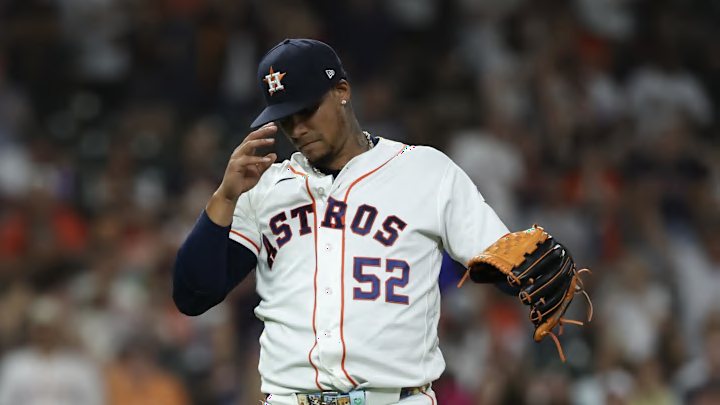
When the Houston Astros put Josh Hader on the IL this spring, the level of alarm running through the organization wasn't at the same feverish pitch that it would be for most organizations. Losing a three-time Reliever of the Year (Hoffman variety, during his work in the National League) isn't ideal, but with Bryan Abreu stepping into the void, the Astros felt they were in good hands.
Houston has referred to Abreu as their "second closer," and since 2022, few relievers have thrown more innings or been as dominant as the 29-year-old, regardless of whether or not they own the closer label.
However, Abreu hasn't looked sharp in either of his first two appearances of 2026, which in and of itself isn't a major worry, though it bears watching. However, his plummeting velocity is a bit more concerning. In 2025, Abreu's average fastball velocity sat at 97.3 miles per hour. On Saturday, he averaged 95.9 miles per hour, and on Sunday, he was in freefall, sitting at 93.2 miles per hour.
The precipitous drop raised some eyebrows, and with no return date in sight for Hader, it's easy to start feeling like the bullpen could go flying off the rails with Abreu serving as the conductor.
The Astros aren't worried about Bryan Abreu, and that should give nervous fans some solace
After Sunday's performance, Joe Espada served as the voice of reason, saying that the club noticed Abreu's velocity dip but expressed confidence.
"I’m going to talk to him a little bit just to make sure all is there. ... Just more want to see the conviction behind his pitches. I want to see him attack. He’s one of the best relievers in the game. Those guys on the other side, they don’t want to see you on the mound. I want to see that bulldog mentality. It’s in there and today was one of those days. We’ll turn the page and them him going," the skipper said.
Abreu has allowed four earned runs over just 1⅓ innings, walking four batters while generating three strikeouts. That doesn't look great, but there are some explanations.
First, his Saturday performance, while not pretty, didn't actually cost Houston. He entered an unfamiliar situation, having a five-run lead, and struck the first two batters he faced. Two walks to Zach Neto and Mike Trout set up the big three-run blast from Nolan Schanuel, but he bounced back right away to get Jorge Soler on strikes and end the threat.
On Sunday, control was an even greater issue for Abreu as a pair of walks sandwiched a wild pitch and got him into a jam. Espada had a quick hook, and Bryan King allowed the first inherited runner to score, tagging Abreu with his fourth earned run allowed of the season.
It's not uncommon for relievers to struggle on back-to-back days early on in the season. They're typically protected from that during the spring and are still building their arms up.
On top of that, Abreu is something of a slow starter. For his career, he has a 3.59 ERA in the first month of the season, which is a far cry from the 2.75 mark he owns overall. Additionally, the .315 wOBA he's allowed in March and April is by far the highest he's allowed in any month throughout his career, with the next-worst mark coming in at .281 in July.
Keep an eye on the velocity, but if it bounces back over his next few outings, there will be no reason to panic. Sometimes guys just come out of the gate slowly, and fortunately for the Astros, they won both of Abreu's subpar games.
 Add us as a preferred source on Google