%20%20--%3E%0A%3Csvg%20version%3D%221.1%22%20xmlns%3D%22http%3A%2F%2Fwww.w3.org%2F2000%2Fsvg%22%20xmlns%3Axlink%3D%22http%3A%2F%2Fwww.w3.org%2F1999%2Fxlink%22%20x%3D%220px%22%20y%3D%220px%22%0A%09%20viewBox%3D%220%200%201055.1%20200%22%20style%3D%22enable-background%3Anew%200%200%201055.1%20200%3B%22%20xml%3Aspace%3D%22preserve%22%3E%0A%3Cstyle%20type%3D%22text%2Fcss%22%3E%0A%09.st0%7Bfill%3A%23231F20%3B%7D%0A%09.st1%7Bfill%3A%230E203C%3B%7D%0A%09.st2%7Bfill%3A%23EC4324%3B%7D%0A%09.st3%7Bfill%3A%23FFFFFF%3B%7D%0A%3C%2Fstyle%3E%0A%3Cg%20id%3D%22Template%22%3E%0A%3C%2Fg%3E%0A%3Cg%20id%3D%22Layer_2%22%3E%0A%09%3Cpath%20class%3D%22st3%22%20d%3D%22M58.3%2C200.3h82.4c12.4%2C0%2C21.7-1.5%2C28-4.5c20.2-9.6%2C30.2-26.1%2C30.2-49.3c0-3.2-0.2-9.3-0.6-18.3h-65.1v14.9%0A%09%09c-0.9%2C3.9-3.4%2C5.8-7.5%2C5.8H73.2c-5%2C0-7.5-2.5-7.5-7.5V59.2c0-5%2C2.5-7.5%2C7.5-7.5h52.5c5%2C0%2C7.5%2C2.1%2C7.5%2C6.4v10.8h65.7V55.7%0A%09%09c0-16.3-3.8-28.3-11.4-36.1c-8.8-12.9-24.7-19.3-47.4-19.3H58.9C47%2C0.3%2C38%2C1.7%2C32%2C4.3c-21.3%2C9-32%2C26.1-32%2C51.4v88%0A%09%09c0%2C16.5%2C3.6%2C28.7%2C10.9%2C36.6C20.1%2C193.7%2C35.9%2C200.3%2C58.3%2C200.3z%22%2F%3E%0A%09%3Cpolygon%20class%3D%22st3%22%20points%3D%22596.6%2C64%20596.6%2C0.8%20400.1%2C0.8%20400.1%2C64%20442.7%2C64%20442.7%2C51.3%20466.1%2C51.3%20466.1%2C148.1%20442.1%2C148.1%20%0A%09%09442.1%2C199.9%20554.8%2C199.9%20554.8%2C148.1%20531.5%2C148.1%20531.5%2C51.4%20554.8%2C51.4%20554.8%2C64%20%09%22%2F%3E%0A%09%3Cpolygon%20class%3D%22st3%22%20points%3D%22942.4%2C148.5%20942.4%2C200.2%201055.1%2C200.2%201055.1%2C148.5%201031.8%2C148.5%201031.8%2C51.2%201055.1%2C51.2%201055.1%2C0.8%20%0A%09%09943.1%2C0.8%20943.1%2C51.3%20966.3%2C51.3%20966.3%2C80%20888.9%2C80%20888.9%2C51.3%20912.6%2C51.3%20912.6%2C0.5%20800.1%2C0.8%20800.1%2C51.4%20823.5%2C51.4%20823.5%2C148.6%20%0A%09%09800.1%2C148.6%20800.1%2C200.1%20912.6%2C200.1%20912.6%2C148.6%20888.9%2C148.6%20888.9%2C116.4%20966.3%2C116.4%20966.3%2C148.5%20%09%22%2F%3E%0A%09%3Cpolygon%20class%3D%22st2%22%20points%3D%22315.5%2C83.9%20299.6%2C34.9%20283.7%2C83.9%20232.2%2C83.9%20273.9%2C114.1%20258%2C163.1%20299.6%2C132.8%20341.3%2C163.1%20%0A%09%09325.4%2C114.1%20367%2C83.9%20%09%22%2F%3E%0A%09%3Cpolygon%20class%3D%22st2%22%20points%3D%22715.6%2C83.9%20699.7%2C34.9%20683.8%2C83.9%20632.3%2C83.9%20674%2C114.1%20658%2C163.1%20699.7%2C132.8%20741.3%2C163.1%20%0A%09%09725.4%2C114.1%20767.1%2C83.9%20%09%22%2F%3E%0A%3C%2Fg%3E%0A%3C%2Fsvg%3E%0A)

Starting pitching is expensive, and seemingly getting more expensive by the day. At the trade deadline, Dylan Cease was nearly a member of the Houston Astros, but now, he's a member of the Toronto Blue Jays, getting about $30 million more than what he was projected by experts to get this offseason in free agency.
With only about $26 million to work with before hitting the luxury tax line, signing one of the top free-agent starters went from a difficult proposition to impossible in light of the deal Cease just signed.
The trade market is tough, too. The Astros' farm system ranks at the very bottom of the league, so Houston won't be able to convince rebuilding teams like the Minnesota Twins to part with gems like Joe Ryan. Contending teams, like the Cincinnati Reds, might be willing to part with an arm in order to fix their lineup, but the Astros lack sufficient big league depth to make such a swap possible.
It's starting to look like Houston is stuck between a rock and a hard place, but there is one trade target they can turn to who could give them everything they need without costing much in return. The catch? They'd have to take on some risk.
The Mets are looking for a top-of-the-rotation arm, much like the Astros are, but they have the budget to pay the premium prices. The issue they have is not a lack of funds, but a lack of rotation spots and they've already made it clear that they'd love to move on from Kodai Senga.
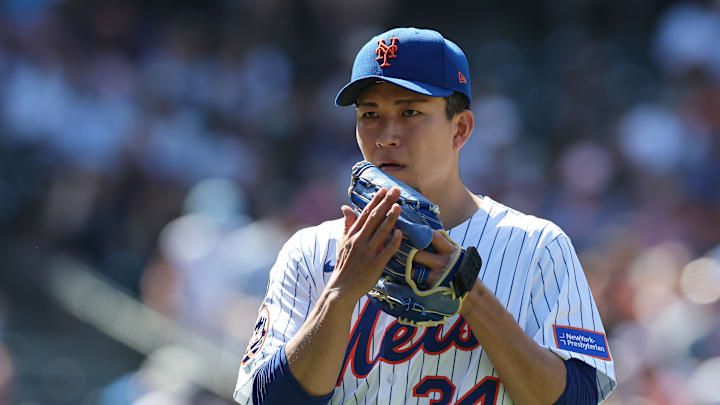
Enigmatic Mets ace Kodai Senga could be a perfect solution for the Astros' rotation
With two years at $15 million a piece before a conditional club option for 2028 left on his deal, Senga is extremely affordable. With a career ERA of 3.00, he's been very productive. So, why in the world would the Mets, who are allegedly searching for an ace, more or less be pushing one they already have out the door?
Well, when it comes to Senga, things are a bit complicated. The soon-to-be 33-year-old arrived stateside in 2023, bringing with him a pitch known as the ghost fork, which leads an impressive repertoire, but also a checkered injury history.
Things went as well as could be expected in 2023. Senga preferred the once-a-week schedule he was accustomed to pitching on in Japan, but a 2.98 ERA over 166.1 innings was as good as they could have hoped for.
Senga's follow-up was essentially a lost year. His 2024 season was delayed due to a shoulder strain, which kept him out until late July, and a calf strain in his first start of the IL would effectively end his regular season with just 5.1 innings pitched and a triceps strain in a rehab start was another setback,. While he eventually made the postseason roster, Senga did not pitch well with a 12.60 ERA.
This year, things got ever weirder. Senga was arguably the most dominant pitcher in baseball with a 1.47 ERA through June 12, but a hamstring strain would keep him out of action for a month. Returning on July 11, Senga never looked quite right. From July 11 through August 31, he'd throw 39.2 innings and post a 5.69 ERA, eventually getting sent down to Triple-A to work through his issues.
In all likelihood, Senga wasn't fully healthy when he returned and that possibly impacted his performance. The Mets have clearly grown tired of his unreliability, and have some additional motivation to move him. After Tatsuya Imai, the next hotshot starter to make the leap from Japan's NPB to the majors, came out and said he doesn't want to play for a team that already employs a Japanese player, having Senga around is potentially a liability in those talks.
Senga is an imperfect pitcher. You don't know if he's going to give you a Cy Young-level performance or spend the entire year on the IL. Given Houston's dire financial straits, pitchers with blemishes are the only legitimate options available to them. No one else comes with Senga's upside and comes at a relatively cheap cost both in terms of prospects and dollars. Therefore, he might be Houston's best hope.
 Add us as a preferred source on Google