%20%20--%3E%0A%3Csvg%20version%3D%221.1%22%20xmlns%3D%22http%3A%2F%2Fwww.w3.org%2F2000%2Fsvg%22%20xmlns%3Axlink%3D%22http%3A%2F%2Fwww.w3.org%2F1999%2Fxlink%22%20x%3D%220px%22%20y%3D%220px%22%0A%09%20viewBox%3D%220%200%201055.1%20200%22%20style%3D%22enable-background%3Anew%200%200%201055.1%20200%3B%22%20xml%3Aspace%3D%22preserve%22%3E%0A%3Cstyle%20type%3D%22text%2Fcss%22%3E%0A%09.st0%7Bfill%3A%23231F20%3B%7D%0A%09.st1%7Bfill%3A%230E203C%3B%7D%0A%09.st2%7Bfill%3A%23EC4324%3B%7D%0A%09.st3%7Bfill%3A%23FFFFFF%3B%7D%0A%3C%2Fstyle%3E%0A%3Cg%20id%3D%22Template%22%3E%0A%3C%2Fg%3E%0A%3Cg%20id%3D%22Layer_2%22%3E%0A%09%3Cpath%20class%3D%22st3%22%20d%3D%22M58.3%2C200.3h82.4c12.4%2C0%2C21.7-1.5%2C28-4.5c20.2-9.6%2C30.2-26.1%2C30.2-49.3c0-3.2-0.2-9.3-0.6-18.3h-65.1v14.9%0A%09%09c-0.9%2C3.9-3.4%2C5.8-7.5%2C5.8H73.2c-5%2C0-7.5-2.5-7.5-7.5V59.2c0-5%2C2.5-7.5%2C7.5-7.5h52.5c5%2C0%2C7.5%2C2.1%2C7.5%2C6.4v10.8h65.7V55.7%0A%09%09c0-16.3-3.8-28.3-11.4-36.1c-8.8-12.9-24.7-19.3-47.4-19.3H58.9C47%2C0.3%2C38%2C1.7%2C32%2C4.3c-21.3%2C9-32%2C26.1-32%2C51.4v88%0A%09%09c0%2C16.5%2C3.6%2C28.7%2C10.9%2C36.6C20.1%2C193.7%2C35.9%2C200.3%2C58.3%2C200.3z%22%2F%3E%0A%09%3Cpolygon%20class%3D%22st3%22%20points%3D%22596.6%2C64%20596.6%2C0.8%20400.1%2C0.8%20400.1%2C64%20442.7%2C64%20442.7%2C51.3%20466.1%2C51.3%20466.1%2C148.1%20442.1%2C148.1%20%0A%09%09442.1%2C199.9%20554.8%2C199.9%20554.8%2C148.1%20531.5%2C148.1%20531.5%2C51.4%20554.8%2C51.4%20554.8%2C64%20%09%22%2F%3E%0A%09%3Cpolygon%20class%3D%22st3%22%20points%3D%22942.4%2C148.5%20942.4%2C200.2%201055.1%2C200.2%201055.1%2C148.5%201031.8%2C148.5%201031.8%2C51.2%201055.1%2C51.2%201055.1%2C0.8%20%0A%09%09943.1%2C0.8%20943.1%2C51.3%20966.3%2C51.3%20966.3%2C80%20888.9%2C80%20888.9%2C51.3%20912.6%2C51.3%20912.6%2C0.5%20800.1%2C0.8%20800.1%2C51.4%20823.5%2C51.4%20823.5%2C148.6%20%0A%09%09800.1%2C148.6%20800.1%2C200.1%20912.6%2C200.1%20912.6%2C148.6%20888.9%2C148.6%20888.9%2C116.4%20966.3%2C116.4%20966.3%2C148.5%20%09%22%2F%3E%0A%09%3Cpolygon%20class%3D%22st2%22%20points%3D%22315.5%2C83.9%20299.6%2C34.9%20283.7%2C83.9%20232.2%2C83.9%20273.9%2C114.1%20258%2C163.1%20299.6%2C132.8%20341.3%2C163.1%20%0A%09%09325.4%2C114.1%20367%2C83.9%20%09%22%2F%3E%0A%09%3Cpolygon%20class%3D%22st2%22%20points%3D%22715.6%2C83.9%20699.7%2C34.9%20683.8%2C83.9%20632.3%2C83.9%20674%2C114.1%20658%2C163.1%20699.7%2C132.8%20741.3%2C163.1%20%0A%09%09725.4%2C114.1%20767.1%2C83.9%20%09%22%2F%3E%0A%3C%2Fg%3E%0A%3C%2Fsvg%3E%0A)

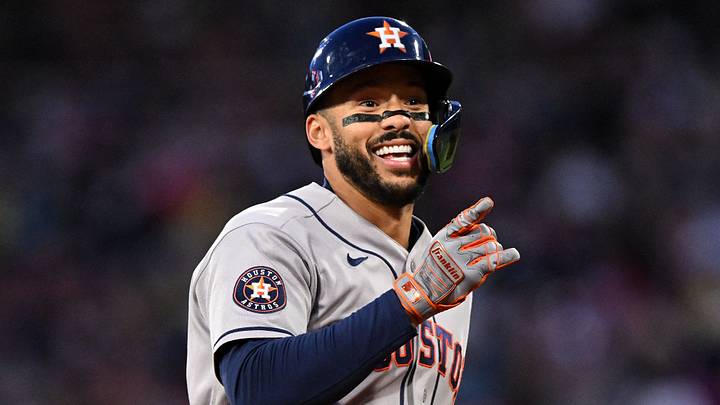
When Carlos Correa went down in May with a torn peroneus brevis tendon in his left ankle, the assumption was his season was done. And yet, here we are in early August, and he hasn’t ruled out a return. His recovery has moved faster than anyone expected, and he’s already cleared for everything short of live hitting.
“We’ll see,” he said when asked directly about playing again in 2026. “I wouldn’t be doing all this work if I didn’t think there was a chance.”
The math on Carlos Correa's potential return doesn't add up
Correa turns 32 next month, and it’s not like we’re talking about someone who has dealt with just one freak injury and has been durable otherwise. Ankle issues are why he’s even on this contract at all. They blew up two different agreements in free agency before 2023 that led him back to the Minnesota Twins on a much more team-friendly contract.
Correa missed the second half of 2024 with plantar fasciitis in his right foot. He dealt with the same issue in his left foot the year before. He’s also had a fibula fracture, a thumb ligament tear, a cracked rib, and probably more. This is a player with an excellent career who has also dealt with quite a bit.
Correa's still allowed about $63 million in 2027 and 2028 (though the Twins are paying $20 million of that) with team options that can become guaranteed through 2032. If Correa comes back in September on a surgically repaired ankle, plays a few weeks with almost no ramp-up and something goes wrong, the Astros aren’t just losing him for a month. They’re potentially losing him for a pretty expensive season or two in a contract that will go from okay, but shaky to completely radioactive.
What makes rushing him back even harder to justify is that they haven’t needed him. They took over the division lead at the start of the month and have been surging for weeks. There was an infield glut at one point that was first alleviated by Jeremy Peña’s injury earlier this season, but then by Correa missing time. Since returning, Peña has held down shortstop and then some, while Isaac Paredes and the rest of the infield have absorbed the workload.
This isn’t a team desperately searching for a bat to save its season. It’s a team that seems to have found stability specifically because it stopped needing Correa to be healthy.
That right there is why a September return would feel less like a baseball decision than a sentimental one. Correa obviously wants to play. Nobody wants their season to end in the trainer’s room. After finding his way back to Houston last year, he clearly cares about being a part of whatever this team does down the stretch. But wanting to play and the team needing him are two very different things. The Astros have the luxury of not forcing anything.
Houston already knows how fragile this situation is. They watched what they thought was the worst-case scenario play out in May when a routine pregame warmup turned into surgery and a long recovery. Bringing him back for a token few weeks doesn’t meaningfully change October. All it does is reopen a door that took quite some time to close.
All this to say that if Correa is fully healthy and there are no restrictions in his return, the conversation does change things a bit. A rested, dangerous bat added to a contending roster is well worth the risk. But if he’s rushing back on an ankle that was a problem before and was very recently surgically repaired just because he’s trying to be a part of something, that isn’t worth it and the Astros stand to lose quite a bit. They didn’t need him to get where they’ve gotten, and they shouldn’t need to prove anything by getting him back before he’s actually ready.
 Add us as a preferred source on Google