%20%20--%3E%0A%3Csvg%20version%3D%221.1%22%20xmlns%3D%22http%3A%2F%2Fwww.w3.org%2F2000%2Fsvg%22%20xmlns%3Axlink%3D%22http%3A%2F%2Fwww.w3.org%2F1999%2Fxlink%22%20x%3D%220px%22%20y%3D%220px%22%0A%09%20viewBox%3D%220%200%201055.1%20200%22%20style%3D%22enable-background%3Anew%200%200%201055.1%20200%3B%22%20xml%3Aspace%3D%22preserve%22%3E%0A%3Cstyle%20type%3D%22text%2Fcss%22%3E%0A%09.st0%7Bfill%3A%23231F20%3B%7D%0A%09.st1%7Bfill%3A%230E203C%3B%7D%0A%09.st2%7Bfill%3A%23EC4324%3B%7D%0A%09.st3%7Bfill%3A%23FFFFFF%3B%7D%0A%3C%2Fstyle%3E%0A%3Cg%20id%3D%22Template%22%3E%0A%3C%2Fg%3E%0A%3Cg%20id%3D%22Layer_2%22%3E%0A%09%3Cpath%20class%3D%22st3%22%20d%3D%22M58.3%2C200.3h82.4c12.4%2C0%2C21.7-1.5%2C28-4.5c20.2-9.6%2C30.2-26.1%2C30.2-49.3c0-3.2-0.2-9.3-0.6-18.3h-65.1v14.9%0A%09%09c-0.9%2C3.9-3.4%2C5.8-7.5%2C5.8H73.2c-5%2C0-7.5-2.5-7.5-7.5V59.2c0-5%2C2.5-7.5%2C7.5-7.5h52.5c5%2C0%2C7.5%2C2.1%2C7.5%2C6.4v10.8h65.7V55.7%0A%09%09c0-16.3-3.8-28.3-11.4-36.1c-8.8-12.9-24.7-19.3-47.4-19.3H58.9C47%2C0.3%2C38%2C1.7%2C32%2C4.3c-21.3%2C9-32%2C26.1-32%2C51.4v88%0A%09%09c0%2C16.5%2C3.6%2C28.7%2C10.9%2C36.6C20.1%2C193.7%2C35.9%2C200.3%2C58.3%2C200.3z%22%2F%3E%0A%09%3Cpolygon%20class%3D%22st3%22%20points%3D%22596.6%2C64%20596.6%2C0.8%20400.1%2C0.8%20400.1%2C64%20442.7%2C64%20442.7%2C51.3%20466.1%2C51.3%20466.1%2C148.1%20442.1%2C148.1%20%0A%09%09442.1%2C199.9%20554.8%2C199.9%20554.8%2C148.1%20531.5%2C148.1%20531.5%2C51.4%20554.8%2C51.4%20554.8%2C64%20%09%22%2F%3E%0A%09%3Cpolygon%20class%3D%22st3%22%20points%3D%22942.4%2C148.5%20942.4%2C200.2%201055.1%2C200.2%201055.1%2C148.5%201031.8%2C148.5%201031.8%2C51.2%201055.1%2C51.2%201055.1%2C0.8%20%0A%09%09943.1%2C0.8%20943.1%2C51.3%20966.3%2C51.3%20966.3%2C80%20888.9%2C80%20888.9%2C51.3%20912.6%2C51.3%20912.6%2C0.5%20800.1%2C0.8%20800.1%2C51.4%20823.5%2C51.4%20823.5%2C148.6%20%0A%09%09800.1%2C148.6%20800.1%2C200.1%20912.6%2C200.1%20912.6%2C148.6%20888.9%2C148.6%20888.9%2C116.4%20966.3%2C116.4%20966.3%2C148.5%20%09%22%2F%3E%0A%09%3Cpolygon%20class%3D%22st2%22%20points%3D%22315.5%2C83.9%20299.6%2C34.9%20283.7%2C83.9%20232.2%2C83.9%20273.9%2C114.1%20258%2C163.1%20299.6%2C132.8%20341.3%2C163.1%20%0A%09%09325.4%2C114.1%20367%2C83.9%20%09%22%2F%3E%0A%09%3Cpolygon%20class%3D%22st2%22%20points%3D%22715.6%2C83.9%20699.7%2C34.9%20683.8%2C83.9%20632.3%2C83.9%20674%2C114.1%20658%2C163.1%20699.7%2C132.8%20741.3%2C163.1%20%0A%09%09725.4%2C114.1%20767.1%2C83.9%20%09%22%2F%3E%0A%3C%2Fg%3E%0A%3C%2Fsvg%3E%0A)

For an aging, cash-strapped team, the emergence of top prospects could be just the shot in the arm it needs to vitalize the contention window. The Houston Astros fit that criteria, but unfortunately, with a bottom-ranked farm system, those youthful reinforcements are few and far between.
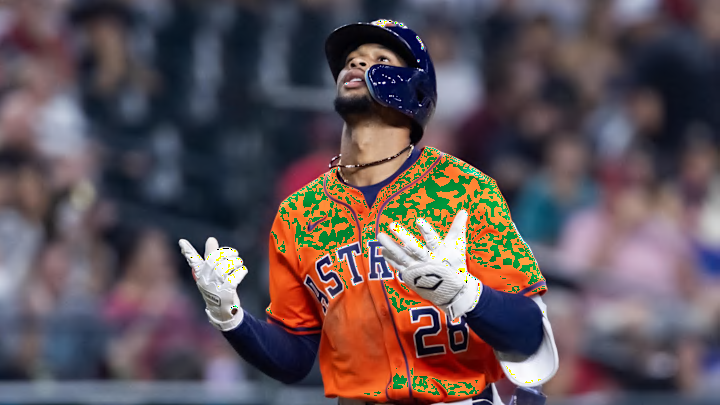
The one standout is No. 1 prospect Brice Matthews. He got a brief call-up last season and is being named a dark horse candidate to make the Astros' opening day roster. The 24-year-old struggled overall in his 13-game big league stint, but he showed enough flashes to believe his skills are for real.
While a strong spring would typically make him a shoo-in to break camp with the big league club, Houston's unbreakable infield logjam makes it nearly impossible to find a way for him to see playing time if he does.
The Astros' logjam blocking Brice Matthew's big league ascension highlights the myriad of roster-building missteps they've made
The thing that truly stands out is just how many errors the Astros have made in recent years that have led to this situation. Matthews was drafted as a shortstop, a position now occupied by 2025 breakout star Jeremy Peña. Houston missed the boat on an extension with the 28-year-old, and with Peña set to hit free agency after 2027, the timeline for Matthews to succeed him at the position is broken.
As he's progressed through the minors, second base has become the most commonly played position for Matthews, but Jose Altuve's extension, which took effect last season, will block that position through 2029.
This is to say nothing of the bottleneck at the corners where Carlos Correa, Christian Walker, and Isaac Paredes are all competing for just two spots. Without any chance of an opening there, the flexibility in the infield is nonexistent. This dire situation all came to pass thanks to the misguided signing of Walker last offseason, and was exacerbated by the panic trade to reunite with Correa at last year's trade deadline following Paredes' hamstring injury.
All of this has the club considering giving Matthews some run in center field. The experiment started briefly last season with the youngster appearing in nine games in center down at Sugar Land. Still, having him learn a new position on the fly in the bigs (even with a spring training warm-up) is less than ideal. He'd also have to contend with Jake Meyers for playing time, as the veteran hasn't been moved despite persistent trade rumors.
At the end of it all, Matthews making the roster would stunt his development, and he'd be better off playing every day in Triple-A until something gives in Houston. However, holding a prospect down too long is like leaving fruit on the vine, eventually it withers away and turns to dust.
All of these situations involve veterans who are here for the long haul. Altuve and Correa aren't going anywhere any time soon, and Walker, Peña, and Paredes (if he's not traded) will all be in the fold for at least another year after 2026.
What this really represents is a dramatic lack of foresight. Rather than having a plan and adjusting as needed, it seems as if Dana Brown has waited until an emergency presents itself before reacting. Being reactive rather than proactive has brought the club to the point where the jewels of the Kyle Tucker trade, Paredes and Cam Smith, suddenly have no place to play, while aging and declining players are hogging spots that could go to upstart youngsters who could spark the Astros' future.
The tough reality for Matthews is that no matter how well he performs this spring, he's almost surely getting bumped back to Sugar Land in the short term, while his long-term outlook is murky at best.
 Add us as a preferred source on Google