%20%20--%3E%0A%3Csvg%20version%3D%221.1%22%20xmlns%3D%22http%3A%2F%2Fwww.w3.org%2F2000%2Fsvg%22%20xmlns%3Axlink%3D%22http%3A%2F%2Fwww.w3.org%2F1999%2Fxlink%22%20x%3D%220px%22%20y%3D%220px%22%0A%09%20viewBox%3D%220%200%201055.1%20200%22%20style%3D%22enable-background%3Anew%200%200%201055.1%20200%3B%22%20xml%3Aspace%3D%22preserve%22%3E%0A%3Cstyle%20type%3D%22text%2Fcss%22%3E%0A%09.st0%7Bfill%3A%23231F20%3B%7D%0A%09.st1%7Bfill%3A%230E203C%3B%7D%0A%09.st2%7Bfill%3A%23EC4324%3B%7D%0A%09.st3%7Bfill%3A%23FFFFFF%3B%7D%0A%3C%2Fstyle%3E%0A%3Cg%20id%3D%22Template%22%3E%0A%3C%2Fg%3E%0A%3Cg%20id%3D%22Layer_2%22%3E%0A%09%3Cpath%20class%3D%22st3%22%20d%3D%22M58.3%2C200.3h82.4c12.4%2C0%2C21.7-1.5%2C28-4.5c20.2-9.6%2C30.2-26.1%2C30.2-49.3c0-3.2-0.2-9.3-0.6-18.3h-65.1v14.9%0A%09%09c-0.9%2C3.9-3.4%2C5.8-7.5%2C5.8H73.2c-5%2C0-7.5-2.5-7.5-7.5V59.2c0-5%2C2.5-7.5%2C7.5-7.5h52.5c5%2C0%2C7.5%2C2.1%2C7.5%2C6.4v10.8h65.7V55.7%0A%09%09c0-16.3-3.8-28.3-11.4-36.1c-8.8-12.9-24.7-19.3-47.4-19.3H58.9C47%2C0.3%2C38%2C1.7%2C32%2C4.3c-21.3%2C9-32%2C26.1-32%2C51.4v88%0A%09%09c0%2C16.5%2C3.6%2C28.7%2C10.9%2C36.6C20.1%2C193.7%2C35.9%2C200.3%2C58.3%2C200.3z%22%2F%3E%0A%09%3Cpolygon%20class%3D%22st3%22%20points%3D%22596.6%2C64%20596.6%2C0.8%20400.1%2C0.8%20400.1%2C64%20442.7%2C64%20442.7%2C51.3%20466.1%2C51.3%20466.1%2C148.1%20442.1%2C148.1%20%0A%09%09442.1%2C199.9%20554.8%2C199.9%20554.8%2C148.1%20531.5%2C148.1%20531.5%2C51.4%20554.8%2C51.4%20554.8%2C64%20%09%22%2F%3E%0A%09%3Cpolygon%20class%3D%22st3%22%20points%3D%22942.4%2C148.5%20942.4%2C200.2%201055.1%2C200.2%201055.1%2C148.5%201031.8%2C148.5%201031.8%2C51.2%201055.1%2C51.2%201055.1%2C0.8%20%0A%09%09943.1%2C0.8%20943.1%2C51.3%20966.3%2C51.3%20966.3%2C80%20888.9%2C80%20888.9%2C51.3%20912.6%2C51.3%20912.6%2C0.5%20800.1%2C0.8%20800.1%2C51.4%20823.5%2C51.4%20823.5%2C148.6%20%0A%09%09800.1%2C148.6%20800.1%2C200.1%20912.6%2C200.1%20912.6%2C148.6%20888.9%2C148.6%20888.9%2C116.4%20966.3%2C116.4%20966.3%2C148.5%20%09%22%2F%3E%0A%09%3Cpolygon%20class%3D%22st2%22%20points%3D%22315.5%2C83.9%20299.6%2C34.9%20283.7%2C83.9%20232.2%2C83.9%20273.9%2C114.1%20258%2C163.1%20299.6%2C132.8%20341.3%2C163.1%20%0A%09%09325.4%2C114.1%20367%2C83.9%20%09%22%2F%3E%0A%09%3Cpolygon%20class%3D%22st2%22%20points%3D%22715.6%2C83.9%20699.7%2C34.9%20683.8%2C83.9%20632.3%2C83.9%20674%2C114.1%20658%2C163.1%20699.7%2C132.8%20741.3%2C163.1%20%0A%09%09725.4%2C114.1%20767.1%2C83.9%20%09%22%2F%3E%0A%3C%2Fg%3E%0A%3C%2Fsvg%3E%0A)

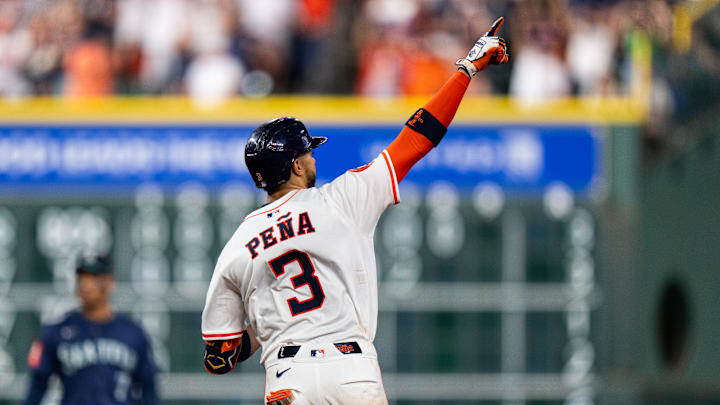
The Houston Astros might soon have a dilemma on their hands. The positive end of the spectrum is that Jeremy Peña's offensive breakthrough finally came at a point when Jose Altuve is declining, Christian Walker was disappointing, and the club has been desperately needing an offensive spark.
The downside is that means the dynamic shortstop is going to get paid. Peña made $4.1 million last season in his first go-around through the arbitration process. That number was based on the strength of his defense, base-running contributions, and league-average bat while playing a premium position. The 2025 All-Star's bat is no longer league average, posting a 135 wRC+ last season; his performance was 35% better than that of an average hitter.
That had him projected to get a sizeable raise. MLB Trade Rumors is usually spot on with their arbitration projections, and at the beginning of the offseason the pegged Peña at a $7.9 million salary for 2026.
The dust has settled as Houston and the 28-year old have come to an agreement, and the number is significantly higher than the projection, coming in at $9.475 million. A difference of roughly $1.5 million doesn't seem like much, but the implications could have big-time consequences for the Astros.
Jeremy Peña's arbitration settlement with the Astros could force the club into an uncomfortable decision
Astros owner Jim Crane is insistent that the luxury tax threshold is a line the team must not cross. Year after year, the edict is the same, and even though the Astros have occasionally spilled over the mark, the amount they're taxed on is typically as significant as a rounding error.
Houston's budget was already tight going into 2026, and that was before adding Tatsuya Imai to a relatively hefty deal. Every penny counts, so $1.5 million beyond expectations for Peña could end up mattering. The payroll situation for 2027 doesn't look much better, and another big year from Peña will have his salary ballooning even further in his final year of team control.
There are two possible solutions to this conundrum. First is to extend the budding star and spread the tax hit out over multiple years. That would seem unlikely, though. Peña hired super-agent Scott Boras halfway through his breakout campaign, seemingly indicating that the time for extension talks is over.
That leaves option two, the Kyle Tucker treatment. The chances of Houston winning a bidding war for Peña on the free-agent market is slim, so there's a chance they deal him away heading into his final year and continue this current cycle of rebuilding on the fly.
But what if the bottom quickly falls out in 2026? Houston is not the near-invincible juggernaut it once was, and with a cluster of older, declining, injury-prone players, things could get ugly real fast if the team stumbles out of the gate.
The 2026 luxury tax is a real concern, and as things stand, there's a good chance the Astros wind up over the mark unless they find a way to shed salary. A disappointing first half could force them to commit to a rebuild and rid themselves of unnecessary tax penalties if they prove they can't compete.
At that point, we could see Peña dangled at the trade deadline as the club looks to reset, as he'll be one of the few prime assets they have that can return the type of young talent that can jumpstart a rebuild. The Astros' barren farm system would benefit, but it would be a severe disappointment for a team that is holding on to the remaining sliver of its contention window for dear life.
 Add us as a preferred source on Google