%20%20--%3E%0A%3Csvg%20version%3D%221.1%22%20xmlns%3D%22http%3A%2F%2Fwww.w3.org%2F2000%2Fsvg%22%20xmlns%3Axlink%3D%22http%3A%2F%2Fwww.w3.org%2F1999%2Fxlink%22%20x%3D%220px%22%20y%3D%220px%22%0A%09%20viewBox%3D%220%200%201055.1%20200%22%20style%3D%22enable-background%3Anew%200%200%201055.1%20200%3B%22%20xml%3Aspace%3D%22preserve%22%3E%0A%3Cstyle%20type%3D%22text%2Fcss%22%3E%0A%09.st0%7Bfill%3A%23231F20%3B%7D%0A%09.st1%7Bfill%3A%230E203C%3B%7D%0A%09.st2%7Bfill%3A%23EC4324%3B%7D%0A%09.st3%7Bfill%3A%23FFFFFF%3B%7D%0A%3C%2Fstyle%3E%0A%3Cg%20id%3D%22Template%22%3E%0A%3C%2Fg%3E%0A%3Cg%20id%3D%22Layer_2%22%3E%0A%09%3Cpath%20class%3D%22st3%22%20d%3D%22M58.3%2C200.3h82.4c12.4%2C0%2C21.7-1.5%2C28-4.5c20.2-9.6%2C30.2-26.1%2C30.2-49.3c0-3.2-0.2-9.3-0.6-18.3h-65.1v14.9%0A%09%09c-0.9%2C3.9-3.4%2C5.8-7.5%2C5.8H73.2c-5%2C0-7.5-2.5-7.5-7.5V59.2c0-5%2C2.5-7.5%2C7.5-7.5h52.5c5%2C0%2C7.5%2C2.1%2C7.5%2C6.4v10.8h65.7V55.7%0A%09%09c0-16.3-3.8-28.3-11.4-36.1c-8.8-12.9-24.7-19.3-47.4-19.3H58.9C47%2C0.3%2C38%2C1.7%2C32%2C4.3c-21.3%2C9-32%2C26.1-32%2C51.4v88%0A%09%09c0%2C16.5%2C3.6%2C28.7%2C10.9%2C36.6C20.1%2C193.7%2C35.9%2C200.3%2C58.3%2C200.3z%22%2F%3E%0A%09%3Cpolygon%20class%3D%22st3%22%20points%3D%22596.6%2C64%20596.6%2C0.8%20400.1%2C0.8%20400.1%2C64%20442.7%2C64%20442.7%2C51.3%20466.1%2C51.3%20466.1%2C148.1%20442.1%2C148.1%20%0A%09%09442.1%2C199.9%20554.8%2C199.9%20554.8%2C148.1%20531.5%2C148.1%20531.5%2C51.4%20554.8%2C51.4%20554.8%2C64%20%09%22%2F%3E%0A%09%3Cpolygon%20class%3D%22st3%22%20points%3D%22942.4%2C148.5%20942.4%2C200.2%201055.1%2C200.2%201055.1%2C148.5%201031.8%2C148.5%201031.8%2C51.2%201055.1%2C51.2%201055.1%2C0.8%20%0A%09%09943.1%2C0.8%20943.1%2C51.3%20966.3%2C51.3%20966.3%2C80%20888.9%2C80%20888.9%2C51.3%20912.6%2C51.3%20912.6%2C0.5%20800.1%2C0.8%20800.1%2C51.4%20823.5%2C51.4%20823.5%2C148.6%20%0A%09%09800.1%2C148.6%20800.1%2C200.1%20912.6%2C200.1%20912.6%2C148.6%20888.9%2C148.6%20888.9%2C116.4%20966.3%2C116.4%20966.3%2C148.5%20%09%22%2F%3E%0A%09%3Cpolygon%20class%3D%22st2%22%20points%3D%22315.5%2C83.9%20299.6%2C34.9%20283.7%2C83.9%20232.2%2C83.9%20273.9%2C114.1%20258%2C163.1%20299.6%2C132.8%20341.3%2C163.1%20%0A%09%09325.4%2C114.1%20367%2C83.9%20%09%22%2F%3E%0A%09%3Cpolygon%20class%3D%22st2%22%20points%3D%22715.6%2C83.9%20699.7%2C34.9%20683.8%2C83.9%20632.3%2C83.9%20674%2C114.1%20658%2C163.1%20699.7%2C132.8%20741.3%2C163.1%20%0A%09%09725.4%2C114.1%20767.1%2C83.9%20%09%22%2F%3E%0A%3C%2Fg%3E%0A%3C%2Fsvg%3E%0A)

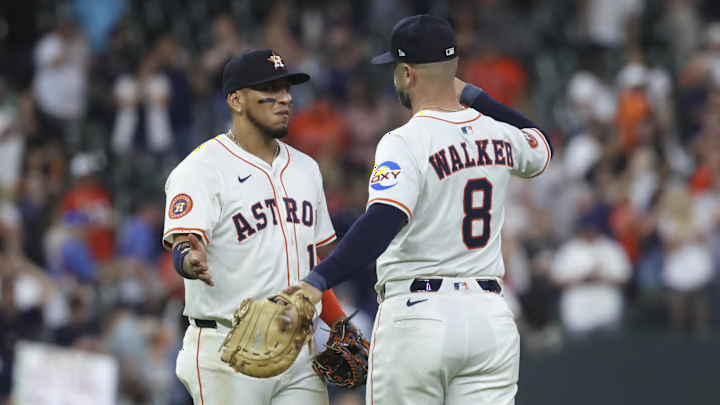
For the time being, the Houston Astros' infield logjam is sorted, though in a less-than-ideal way. Jeremy Peña's injury will allow Carlos Correa to shift to shortstop, paving the way for Isaac Paredes to start at the hot corner while Christian Walker mans first base. The Astros are a better team with Peña in the fold, but until he's recovered from his fractured finger, this is the best-case scenario.
It's also just a temporary solution. Once the star shortstop returns, Correa goes back to third, and the bottleneck returns. It's been a problem that Houston has tried to solve for months, but to no avail.
The Astros could acquiesce to Yordan Alvarez's demands and let him play left field the majority of the time, opening DH for a rotation amongst the infielders and ensuring everyone gets their at-bats, but after injuries limited Alvarez to just 48 games last season, it's a risk that the club would prefer not to take.
What is clear is that the team would prefer to trade Walker, but that takes two to tango, and nobody wants him. Trading Paredes is also difficult because, as a 27-year-old two-time All-Star, he should have a ton of value, but he doesn't because the Astros have no leverage.
The conventional wisdom, then, is that they keep both, with Walker starting at first and Paredes being squeezed in as needed. The only problem with that conventional wisdom is that it ignores logic.
The Astros need to come to the logical conclusion that benching Christian Walker for Isaac Paredes is the best path forward
There are 20 million reasons why Walker is expected to get the nod once Peña returns, as Houston owes him $40 million over the next two seasons. Money is always a motivating factor, but as the 35-year-old's ice-cold spring continues, he's hitting .094/.171/.219 through 12 games, it's becoming clear that he's a sunk cost.
Maybe he shows something during Peña's absence that can ultimately revitalize some sort of trade value, but the likelihood of that happening is slim. So too is the likelihood that he bounces back and becomes the player Houston thought it was getting.
The way the Astros have assembled their roster shows they intend to compete in 2026. They have to. They have too many aging players and bloated contracts to do anything else. The jury is still out as to whether or not they have the horses to truly contend, but what should be crystal clear is that Paredes is one of their prime thoroughbreds. To that end, if contention is the goal, he needs to play every day. Full stop.
The logical conclusion, which seems to have been missed throughout this whole months-long debate, is that the best course of action is to plant Walker on the bench and let Paredes roll. Whether he's playing or not, Walker is already a sunk cost, so why let him drag the club down further? He can still get his at-bats when someone needs a breather, and Houston can still leverage Paredes' versatility to facilitate that, but there's no baseball reason why Walker should finish 2026 with more at-bats than Paredes.
If the Astros are serious about contending, this is the play they'll make. If not, they'll be putting roadblocks in their own path and will likely pay the price.
 Add us as a preferred source on Google