%20%20--%3E%0A%3Csvg%20version%3D%221.1%22%20xmlns%3D%22http%3A%2F%2Fwww.w3.org%2F2000%2Fsvg%22%20xmlns%3Axlink%3D%22http%3A%2F%2Fwww.w3.org%2F1999%2Fxlink%22%20x%3D%220px%22%20y%3D%220px%22%0A%09%20viewBox%3D%220%200%201055.1%20200%22%20style%3D%22enable-background%3Anew%200%200%201055.1%20200%3B%22%20xml%3Aspace%3D%22preserve%22%3E%0A%3Cstyle%20type%3D%22text%2Fcss%22%3E%0A%09.st0%7Bfill%3A%23231F20%3B%7D%0A%09.st1%7Bfill%3A%230E203C%3B%7D%0A%09.st2%7Bfill%3A%23EC4324%3B%7D%0A%09.st3%7Bfill%3A%23FFFFFF%3B%7D%0A%3C%2Fstyle%3E%0A%3Cg%20id%3D%22Template%22%3E%0A%3C%2Fg%3E%0A%3Cg%20id%3D%22Layer_2%22%3E%0A%09%3Cpath%20class%3D%22st3%22%20d%3D%22M58.3%2C200.3h82.4c12.4%2C0%2C21.7-1.5%2C28-4.5c20.2-9.6%2C30.2-26.1%2C30.2-49.3c0-3.2-0.2-9.3-0.6-18.3h-65.1v14.9%0A%09%09c-0.9%2C3.9-3.4%2C5.8-7.5%2C5.8H73.2c-5%2C0-7.5-2.5-7.5-7.5V59.2c0-5%2C2.5-7.5%2C7.5-7.5h52.5c5%2C0%2C7.5%2C2.1%2C7.5%2C6.4v10.8h65.7V55.7%0A%09%09c0-16.3-3.8-28.3-11.4-36.1c-8.8-12.9-24.7-19.3-47.4-19.3H58.9C47%2C0.3%2C38%2C1.7%2C32%2C4.3c-21.3%2C9-32%2C26.1-32%2C51.4v88%0A%09%09c0%2C16.5%2C3.6%2C28.7%2C10.9%2C36.6C20.1%2C193.7%2C35.9%2C200.3%2C58.3%2C200.3z%22%2F%3E%0A%09%3Cpolygon%20class%3D%22st3%22%20points%3D%22596.6%2C64%20596.6%2C0.8%20400.1%2C0.8%20400.1%2C64%20442.7%2C64%20442.7%2C51.3%20466.1%2C51.3%20466.1%2C148.1%20442.1%2C148.1%20%0A%09%09442.1%2C199.9%20554.8%2C199.9%20554.8%2C148.1%20531.5%2C148.1%20531.5%2C51.4%20554.8%2C51.4%20554.8%2C64%20%09%22%2F%3E%0A%09%3Cpolygon%20class%3D%22st3%22%20points%3D%22942.4%2C148.5%20942.4%2C200.2%201055.1%2C200.2%201055.1%2C148.5%201031.8%2C148.5%201031.8%2C51.2%201055.1%2C51.2%201055.1%2C0.8%20%0A%09%09943.1%2C0.8%20943.1%2C51.3%20966.3%2C51.3%20966.3%2C80%20888.9%2C80%20888.9%2C51.3%20912.6%2C51.3%20912.6%2C0.5%20800.1%2C0.8%20800.1%2C51.4%20823.5%2C51.4%20823.5%2C148.6%20%0A%09%09800.1%2C148.6%20800.1%2C200.1%20912.6%2C200.1%20912.6%2C148.6%20888.9%2C148.6%20888.9%2C116.4%20966.3%2C116.4%20966.3%2C148.5%20%09%22%2F%3E%0A%09%3Cpolygon%20class%3D%22st2%22%20points%3D%22315.5%2C83.9%20299.6%2C34.9%20283.7%2C83.9%20232.2%2C83.9%20273.9%2C114.1%20258%2C163.1%20299.6%2C132.8%20341.3%2C163.1%20%0A%09%09325.4%2C114.1%20367%2C83.9%20%09%22%2F%3E%0A%09%3Cpolygon%20class%3D%22st2%22%20points%3D%22715.6%2C83.9%20699.7%2C34.9%20683.8%2C83.9%20632.3%2C83.9%20674%2C114.1%20658%2C163.1%20699.7%2C132.8%20741.3%2C163.1%20%0A%09%09725.4%2C114.1%20767.1%2C83.9%20%09%22%2F%3E%0A%3C%2Fg%3E%0A%3C%2Fsvg%3E%0A)

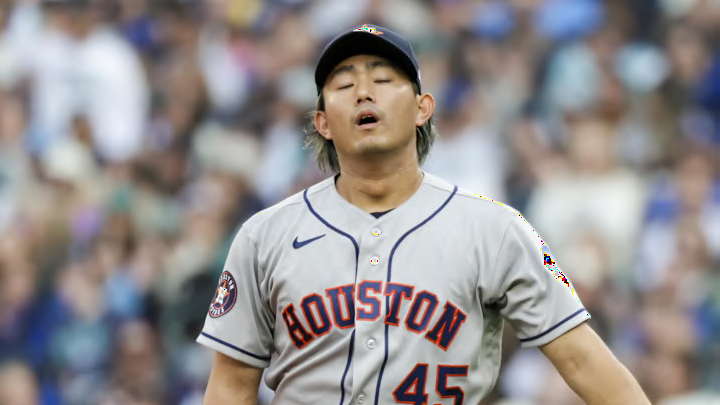
The Houston Astros looked like they got a steal when they signed Tatsuya Imai for a three-year deal worth a max of $63 million. Many pundits thought the 28-year-old would land a deal of $150-plus million, so getting Imai for a little more than a third of that seemed like a win, even if the rest of the terms weren't all that favorable for the Astros.
Essentially, Imai found a softer market than he (and everyone else) expected, and the Astros deal gave him an AAV of between $18 million and $21 million with a relatively easy-to-hit incentive. But also came with an opt-out after each season, allowing him to easily cash in should he assuage the doubts folks seemed to have about his game translating stateside.
For Houston, this was it. They needed a No. 2 starter and didn't have the money to pay an established one. Getting Imai for essentially a discount, they took a high-risk, high-reward gamble. So far, it's blown up in their face, and Imai's lack of accountability is a big reason why.
Tatsuya Imai's subpar rehab outings confirm Astros can no longer accept excuses
Three big league starts, 8⅔ innings, 11 walks, and a 7.27 ERA are the important numbers that Imai left the Astros with before hitting the IL with an injury that was vaguely listed as "arm fatigue."
On the heels of his landing on the IL, it came out that Imai has struggled to adapt to the American lifestyle both on and off the field. That's tough, and understandable. Hopefully, some comfort will come with time. However, Imai has offered up a lot of other excuses for his struggles, most of them of the lame variety.
This was a player who made a big deal during his free-agent tour of wanting to beat the Los Angeles Dodgers, showing a boastful air of confidence that people remember and put a target on his back. It makes him look silly when he comes back with ridiculous explanations for poor outings.
Immediately before hitting the IL, Imai put together his worst start of his young career at T-Mobile Park in Seattle. Against the Mariners on April 10, he lasted just one-third of an inning, allowing four walks and three earned runs. Afterwards, he claimed that the mound was "too hard," and that the weather was colder than he was used to in Japan as reasons why he couldn't throw strikes.
His first rehab start at Double-A Corpus Christi was a disaster that saw him last just two innings while giving up six hits, three walks, and five earned runs. His second rehab start came at Triple-A Sugar Land, and while he didn't give up quite as many runs, he allowed another five walks over only three innings.
Tatsuya Imai here in Sugar Land: 3 IP, 1 H, 1 ER, 5 BB, 3 K, 63 pitches, 27 strikes, 18 swings, 5 whiffs. Imai threw 36 pitches and walked four batters in the third inning. The Astros were hoping he'd throw strikes and go 4 or 5 innings. That did not happen.
— Chandler Rome (@Chandler_Rome) May 6, 2026
Throwing strikes was something of a concern when he was in Japan, but it's become egregious since arriving in Houston, even against inferior competition. Imai seemingly always has an excuse. This time, he's blaming the pitch clock for his inability to throw strikes, citing the lack of a pitch clock in the NPB.
Hard mounds, cold weather, and pitch clocks (on your fifth start in the U.S.) are lame ways to skirt accountability. For one, the pitch clock shouldn't have been a surprise. He'd been planning this move for a while. He should have trained for it. As for the others, it's hard to imagine that there's no variation in the mound from stadium to stadium in Japan, and weather is a fact of life.
Theoretically, there's still time for Imai to turn this around as he rejoins the Astros. In order for that to happen, though, he's going to have to get real about what's going on. It's fine to say he needs to be better, but then he needs to do the work to be better. If not, these struggles will continue, and the Astros will be saddled with yet another undesirable contract as they head towards a very uncertain future.
 Add us as a preferred source on Google