%20%20--%3E%0A%3Csvg%20version%3D%221.1%22%20xmlns%3D%22http%3A%2F%2Fwww.w3.org%2F2000%2Fsvg%22%20xmlns%3Axlink%3D%22http%3A%2F%2Fwww.w3.org%2F1999%2Fxlink%22%20x%3D%220px%22%20y%3D%220px%22%0A%09%20viewBox%3D%220%200%201055.1%20200%22%20style%3D%22enable-background%3Anew%200%200%201055.1%20200%3B%22%20xml%3Aspace%3D%22preserve%22%3E%0A%3Cstyle%20type%3D%22text%2Fcss%22%3E%0A%09.st0%7Bfill%3A%23231F20%3B%7D%0A%09.st1%7Bfill%3A%230E203C%3B%7D%0A%09.st2%7Bfill%3A%23EC4324%3B%7D%0A%09.st3%7Bfill%3A%23FFFFFF%3B%7D%0A%3C%2Fstyle%3E%0A%3Cg%20id%3D%22Template%22%3E%0A%3C%2Fg%3E%0A%3Cg%20id%3D%22Layer_2%22%3E%0A%09%3Cpath%20class%3D%22st3%22%20d%3D%22M58.3%2C200.3h82.4c12.4%2C0%2C21.7-1.5%2C28-4.5c20.2-9.6%2C30.2-26.1%2C30.2-49.3c0-3.2-0.2-9.3-0.6-18.3h-65.1v14.9%0A%09%09c-0.9%2C3.9-3.4%2C5.8-7.5%2C5.8H73.2c-5%2C0-7.5-2.5-7.5-7.5V59.2c0-5%2C2.5-7.5%2C7.5-7.5h52.5c5%2C0%2C7.5%2C2.1%2C7.5%2C6.4v10.8h65.7V55.7%0A%09%09c0-16.3-3.8-28.3-11.4-36.1c-8.8-12.9-24.7-19.3-47.4-19.3H58.9C47%2C0.3%2C38%2C1.7%2C32%2C4.3c-21.3%2C9-32%2C26.1-32%2C51.4v88%0A%09%09c0%2C16.5%2C3.6%2C28.7%2C10.9%2C36.6C20.1%2C193.7%2C35.9%2C200.3%2C58.3%2C200.3z%22%2F%3E%0A%09%3Cpolygon%20class%3D%22st3%22%20points%3D%22596.6%2C64%20596.6%2C0.8%20400.1%2C0.8%20400.1%2C64%20442.7%2C64%20442.7%2C51.3%20466.1%2C51.3%20466.1%2C148.1%20442.1%2C148.1%20%0A%09%09442.1%2C199.9%20554.8%2C199.9%20554.8%2C148.1%20531.5%2C148.1%20531.5%2C51.4%20554.8%2C51.4%20554.8%2C64%20%09%22%2F%3E%0A%09%3Cpolygon%20class%3D%22st3%22%20points%3D%22942.4%2C148.5%20942.4%2C200.2%201055.1%2C200.2%201055.1%2C148.5%201031.8%2C148.5%201031.8%2C51.2%201055.1%2C51.2%201055.1%2C0.8%20%0A%09%09943.1%2C0.8%20943.1%2C51.3%20966.3%2C51.3%20966.3%2C80%20888.9%2C80%20888.9%2C51.3%20912.6%2C51.3%20912.6%2C0.5%20800.1%2C0.8%20800.1%2C51.4%20823.5%2C51.4%20823.5%2C148.6%20%0A%09%09800.1%2C148.6%20800.1%2C200.1%20912.6%2C200.1%20912.6%2C148.6%20888.9%2C148.6%20888.9%2C116.4%20966.3%2C116.4%20966.3%2C148.5%20%09%22%2F%3E%0A%09%3Cpolygon%20class%3D%22st2%22%20points%3D%22315.5%2C83.9%20299.6%2C34.9%20283.7%2C83.9%20232.2%2C83.9%20273.9%2C114.1%20258%2C163.1%20299.6%2C132.8%20341.3%2C163.1%20%0A%09%09325.4%2C114.1%20367%2C83.9%20%09%22%2F%3E%0A%09%3Cpolygon%20class%3D%22st2%22%20points%3D%22715.6%2C83.9%20699.7%2C34.9%20683.8%2C83.9%20632.3%2C83.9%20674%2C114.1%20658%2C163.1%20699.7%2C132.8%20741.3%2C163.1%20%0A%09%09725.4%2C114.1%20767.1%2C83.9%20%09%22%2F%3E%0A%3C%2Fg%3E%0A%3C%2Fsvg%3E%0A)

The Houston Astros are desperately trying to keep their window of contention open. They believe that the collection of players they've put together can not only make the playoffs, but also challenge for a World Series title. Of course, outside of a complete unknown quantity in Tatsuya Imai and a few odds and ends, this is virtually the same roster that collapsed and missed the postseason last year.
If you ask the Astros, injuries were the culprit for their tragic fate last year. While they most certainly played a role, if you ask others, they might have a different opinion of what the real issue was that plagued Houston.
According to MLB.com's tier rankings, the Astros aren't getting back to the playoffs in 2026. In fact, they won't even have more wins than losses, coming in ranked in the "The .500 zone."
The worst thing about that ranking isn't what it means for 2026, but what it means for 2027 and beyond. That's because not all .500 teams are created equal. Some are teams that are coming out of a rebuild and still need one or two finishing touches to ascend to the realm of contention. Others are supernovas that have blown out and are collapsing in on themselves, hurdling towards a dark future.
Astros' rankings isn't just bad for 2026; it paints a bleak picture for 2027 and beyond
All dynasties must come to an end, and the Astros have been on top for quite a long time. That's why it is ironic that the crumbling of their empire has been more self-inflicted than most.
For years, Houston has bled stars. Despite that, Houston was able to hang on for a while. The beginning of the end was the sign-stealing penalties that crippled their ability to revitalize their minor league pipeline. But it wasn't the only thing that mattered.
Frankly, a contender can survive if it doesn't have a good farm system and doesn't even need to spend wildly like the Los Angeles Dodgers to do so. More than the total dollars invested, what matters most is the wisdom behind those investments. That's really where the Astros have failed.
Houston has given out one bad contract after another. Some were unavoidable, like the extension they gave Jose Altuve. That contract doesn't look as good now as it did when he signed it, but he is the face of the franchise. To run him out of town would have been public relations suicide.
But some signings and acquisitions were missteps that could have been avoided. For example, signing Christian Walker after watching Jose Abreu's skills disintegrate before their eyes should have given the Astros a clue that another big-money deal for a late-career slugging first baseman was a bad idea.
Perhaps the most egregious recent move was trading for Carlos Correa at last year's deadline. It was a panic move that was motivated by Isaac Paredes' injury, and has compounded the Walker mistake to the point where the only plausible way out of the logjam is to trade away Paredes, an All-Star in his prime, so that they can maintain two declining players in their 30s.
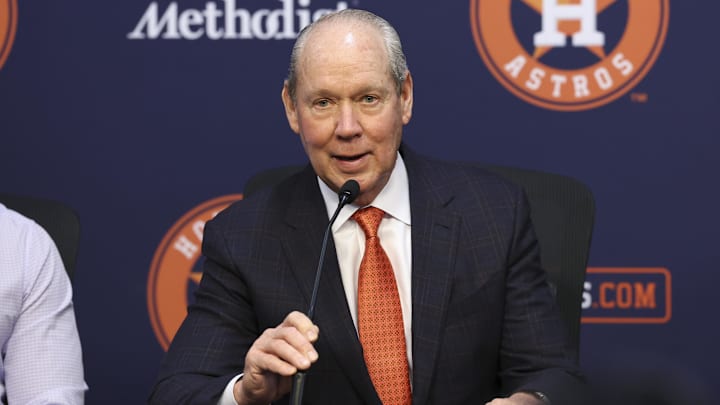
Jim Crane is to blame for the Astros' perilous long-term outlook
Given that Jim Crane refuses to cross the luxury tax, taking on these long-term deals for aging players is costly in more ways than one. Sure, they tie up a lot of payroll, but they also ensure that the dollars the club does have available are allocated to older players on the decline instead of guys who have room to grow.
Think about it this way: if Tatsuya Imai lives up to expectations, he'll opt out in pursuit of the $150 million-plus contract that he was thought to receive when he was first posted. The Astros won't be able to afford that because Correa will cost over $21 million a year towards the luxury tax through 2028 at least.
Why not go after a rental like Eugenio Suarez to fill the void Paredes' injury left in 2025 instead of taking on most of Correa's money? Why not take care of your own house with extensions for young players like Jeremy Peña and Hunter Brown, and do so proactively, instead of waiting until they get too expensive to retain?
Simply put, Houston has loaded its books with aging players while owning a barren farm system, ensuring that it can't retain the young big league talent it has and can't replenish with cheap impact prospects from the farm. If Crane doesn't change his stance on spending, there's no way to avoid the window slamming shut.
The Astros might be ticketed for a .500 campaign in 2026, but they're the opposite of a team on the rise. They're a sinking stone plummeting into the abyss with no means to change course. This season might give you hope that if a couple of things had broken differently, they'd extend the window, but like an oasis in the desert, that hope would be merely a mirage.
 Add us as a preferred source on Google