%20%20--%3E%0A%3Csvg%20version%3D%221.1%22%20xmlns%3D%22http%3A%2F%2Fwww.w3.org%2F2000%2Fsvg%22%20xmlns%3Axlink%3D%22http%3A%2F%2Fwww.w3.org%2F1999%2Fxlink%22%20x%3D%220px%22%20y%3D%220px%22%0A%09%20viewBox%3D%220%200%201055.1%20200%22%20style%3D%22enable-background%3Anew%200%200%201055.1%20200%3B%22%20xml%3Aspace%3D%22preserve%22%3E%0A%3Cstyle%20type%3D%22text%2Fcss%22%3E%0A%09.st0%7Bfill%3A%23231F20%3B%7D%0A%09.st1%7Bfill%3A%230E203C%3B%7D%0A%09.st2%7Bfill%3A%23EC4324%3B%7D%0A%09.st3%7Bfill%3A%23FFFFFF%3B%7D%0A%3C%2Fstyle%3E%0A%3Cg%20id%3D%22Template%22%3E%0A%3C%2Fg%3E%0A%3Cg%20id%3D%22Layer_2%22%3E%0A%09%3Cpath%20class%3D%22st3%22%20d%3D%22M58.3%2C200.3h82.4c12.4%2C0%2C21.7-1.5%2C28-4.5c20.2-9.6%2C30.2-26.1%2C30.2-49.3c0-3.2-0.2-9.3-0.6-18.3h-65.1v14.9%0A%09%09c-0.9%2C3.9-3.4%2C5.8-7.5%2C5.8H73.2c-5%2C0-7.5-2.5-7.5-7.5V59.2c0-5%2C2.5-7.5%2C7.5-7.5h52.5c5%2C0%2C7.5%2C2.1%2C7.5%2C6.4v10.8h65.7V55.7%0A%09%09c0-16.3-3.8-28.3-11.4-36.1c-8.8-12.9-24.7-19.3-47.4-19.3H58.9C47%2C0.3%2C38%2C1.7%2C32%2C4.3c-21.3%2C9-32%2C26.1-32%2C51.4v88%0A%09%09c0%2C16.5%2C3.6%2C28.7%2C10.9%2C36.6C20.1%2C193.7%2C35.9%2C200.3%2C58.3%2C200.3z%22%2F%3E%0A%09%3Cpolygon%20class%3D%22st3%22%20points%3D%22596.6%2C64%20596.6%2C0.8%20400.1%2C0.8%20400.1%2C64%20442.7%2C64%20442.7%2C51.3%20466.1%2C51.3%20466.1%2C148.1%20442.1%2C148.1%20%0A%09%09442.1%2C199.9%20554.8%2C199.9%20554.8%2C148.1%20531.5%2C148.1%20531.5%2C51.4%20554.8%2C51.4%20554.8%2C64%20%09%22%2F%3E%0A%09%3Cpolygon%20class%3D%22st3%22%20points%3D%22942.4%2C148.5%20942.4%2C200.2%201055.1%2C200.2%201055.1%2C148.5%201031.8%2C148.5%201031.8%2C51.2%201055.1%2C51.2%201055.1%2C0.8%20%0A%09%09943.1%2C0.8%20943.1%2C51.3%20966.3%2C51.3%20966.3%2C80%20888.9%2C80%20888.9%2C51.3%20912.6%2C51.3%20912.6%2C0.5%20800.1%2C0.8%20800.1%2C51.4%20823.5%2C51.4%20823.5%2C148.6%20%0A%09%09800.1%2C148.6%20800.1%2C200.1%20912.6%2C200.1%20912.6%2C148.6%20888.9%2C148.6%20888.9%2C116.4%20966.3%2C116.4%20966.3%2C148.5%20%09%22%2F%3E%0A%09%3Cpolygon%20class%3D%22st2%22%20points%3D%22315.5%2C83.9%20299.6%2C34.9%20283.7%2C83.9%20232.2%2C83.9%20273.9%2C114.1%20258%2C163.1%20299.6%2C132.8%20341.3%2C163.1%20%0A%09%09325.4%2C114.1%20367%2C83.9%20%09%22%2F%3E%0A%09%3Cpolygon%20class%3D%22st2%22%20points%3D%22715.6%2C83.9%20699.7%2C34.9%20683.8%2C83.9%20632.3%2C83.9%20674%2C114.1%20658%2C163.1%20699.7%2C132.8%20741.3%2C163.1%20%0A%09%09725.4%2C114.1%20767.1%2C83.9%20%09%22%2F%3E%0A%3C%2Fg%3E%0A%3C%2Fsvg%3E%0A)

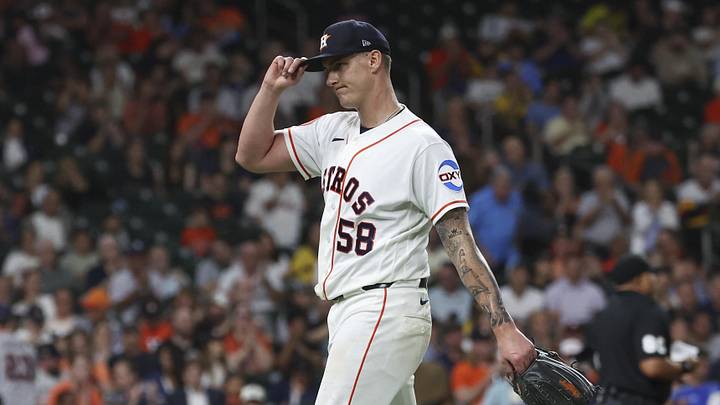
Much of the discourse surrounding whether or not the Houston Astros should be buyers or sellers at the trade deadline has little to do with 2026 and more to do with the future. The team's core can be divided essentially into two parts. There's the old guard, guys like Jose Altuve, Carlos Correa, and Yordan Alvarez, who are locked up for the foreseeable future. Then there's the next wave, which would include Hunter Brown, Jeremy Peña, and Isaac Paredes, who are nearing the end of their team control.
With the exception of Alvarez, who is playing at an MVP level, the declining nature of the aging veterans, combined with the gobs of money they're owed, threatens to close the window that Jim Crane promised would never shut.
Houston missed the boat on extending Peña, and while the door on a Hunter Brown deal hasn't completely closed, it's hard to see how the club could lock him up and stay within budget.
That's why capitalizing on the immense value of these pieces at the trade deadline might be ideal, even though the Astros are still in the thick of the race for both the wild card and AL West crown.
However, with the current Collective Bargaining Agreement expiring on December 1, proposals are flying around between the owners and the players' association, and the latest proposal from the league might give Houston renewed hope that it can keep the core together, which could reinvigorate the club's trade deadline plans.
BREAKING: In its next CBA, the league is proposing a max contract length of 5 yrs for free agent players switching teams, 6 years to retain their own players. No deferred contracts. Qualifying offer is gone too. Also, 5 years to free agency for players 30 or older.
— Jesse Rogers (@JesseRogersESPN) June 25, 2026
Per Jesse Rogers of ESPN, the latest proposal from the owners would limit contract lengths overall, but with one important wrinkle. A free agent could sign with another team for up to a maximum of five years, but if his current team is retaining him, he could receive a six-year deal. Ultimately, that means more money to stay put.
Astros could keep their core together if MLB's latest CBA proposal is accepted, but negotiations are far from over
Getting this buttoned up before the trade deadline could tell the Astros how they should proceed, but don't count on things being that easy. The MLBPA released a statement clapping back at this point, and others proposed by the league, stating that they look like innovations but are actually designed to restrict player rights.
This could be a major issue, as younger free agents at the top of the sport typically land decade-plus long deals that are far more lucrative than what this would allow for. More than five months remain before the expiration of the current CBA, so neither side has much motivation to cave early.
While a system like what the owners are proposing could placate a super-agent like Scott Boras, who has been a barrier in talks with Peña since the initial negotiations fell apart, we might not know if it, or a revised version of it, will be accepted until well into the offseason.
That leaves the Astros with a choice at the deadline. Do they go all in and buy, hoping that this provision holds up and finds its way into the next agreement? Do they hedge their bets and sell off only the pieces they aren't interested in retaining long term? Or do they forget about it entirely and come to the realization that, as much as they might not want to, hitting the reset button is what's needed?
This latest update brings about more uncertainty than it answers, and given Houston's position, it will be fascinating to see how the organization responds.
 Add us as a preferred source on Google