%20%20--%3E%0A%3Csvg%20version%3D%221.1%22%20xmlns%3D%22http%3A%2F%2Fwww.w3.org%2F2000%2Fsvg%22%20xmlns%3Axlink%3D%22http%3A%2F%2Fwww.w3.org%2F1999%2Fxlink%22%20x%3D%220px%22%20y%3D%220px%22%0A%09%20viewBox%3D%220%200%201055.1%20200%22%20style%3D%22enable-background%3Anew%200%200%201055.1%20200%3B%22%20xml%3Aspace%3D%22preserve%22%3E%0A%3Cstyle%20type%3D%22text%2Fcss%22%3E%0A%09.st0%7Bfill%3A%23231F20%3B%7D%0A%09.st1%7Bfill%3A%230E203C%3B%7D%0A%09.st2%7Bfill%3A%23EC4324%3B%7D%0A%09.st3%7Bfill%3A%23FFFFFF%3B%7D%0A%3C%2Fstyle%3E%0A%3Cg%20id%3D%22Template%22%3E%0A%3C%2Fg%3E%0A%3Cg%20id%3D%22Layer_2%22%3E%0A%09%3Cpath%20class%3D%22st3%22%20d%3D%22M58.3%2C200.3h82.4c12.4%2C0%2C21.7-1.5%2C28-4.5c20.2-9.6%2C30.2-26.1%2C30.2-49.3c0-3.2-0.2-9.3-0.6-18.3h-65.1v14.9%0A%09%09c-0.9%2C3.9-3.4%2C5.8-7.5%2C5.8H73.2c-5%2C0-7.5-2.5-7.5-7.5V59.2c0-5%2C2.5-7.5%2C7.5-7.5h52.5c5%2C0%2C7.5%2C2.1%2C7.5%2C6.4v10.8h65.7V55.7%0A%09%09c0-16.3-3.8-28.3-11.4-36.1c-8.8-12.9-24.7-19.3-47.4-19.3H58.9C47%2C0.3%2C38%2C1.7%2C32%2C4.3c-21.3%2C9-32%2C26.1-32%2C51.4v88%0A%09%09c0%2C16.5%2C3.6%2C28.7%2C10.9%2C36.6C20.1%2C193.7%2C35.9%2C200.3%2C58.3%2C200.3z%22%2F%3E%0A%09%3Cpolygon%20class%3D%22st3%22%20points%3D%22596.6%2C64%20596.6%2C0.8%20400.1%2C0.8%20400.1%2C64%20442.7%2C64%20442.7%2C51.3%20466.1%2C51.3%20466.1%2C148.1%20442.1%2C148.1%20%0A%09%09442.1%2C199.9%20554.8%2C199.9%20554.8%2C148.1%20531.5%2C148.1%20531.5%2C51.4%20554.8%2C51.4%20554.8%2C64%20%09%22%2F%3E%0A%09%3Cpolygon%20class%3D%22st3%22%20points%3D%22942.4%2C148.5%20942.4%2C200.2%201055.1%2C200.2%201055.1%2C148.5%201031.8%2C148.5%201031.8%2C51.2%201055.1%2C51.2%201055.1%2C0.8%20%0A%09%09943.1%2C0.8%20943.1%2C51.3%20966.3%2C51.3%20966.3%2C80%20888.9%2C80%20888.9%2C51.3%20912.6%2C51.3%20912.6%2C0.5%20800.1%2C0.8%20800.1%2C51.4%20823.5%2C51.4%20823.5%2C148.6%20%0A%09%09800.1%2C148.6%20800.1%2C200.1%20912.6%2C200.1%20912.6%2C148.6%20888.9%2C148.6%20888.9%2C116.4%20966.3%2C116.4%20966.3%2C148.5%20%09%22%2F%3E%0A%09%3Cpolygon%20class%3D%22st2%22%20points%3D%22315.5%2C83.9%20299.6%2C34.9%20283.7%2C83.9%20232.2%2C83.9%20273.9%2C114.1%20258%2C163.1%20299.6%2C132.8%20341.3%2C163.1%20%0A%09%09325.4%2C114.1%20367%2C83.9%20%09%22%2F%3E%0A%09%3Cpolygon%20class%3D%22st2%22%20points%3D%22715.6%2C83.9%20699.7%2C34.9%20683.8%2C83.9%20632.3%2C83.9%20674%2C114.1%20658%2C163.1%20699.7%2C132.8%20741.3%2C163.1%20%0A%09%09725.4%2C114.1%20767.1%2C83.9%20%09%22%2F%3E%0A%3C%2Fg%3E%0A%3C%2Fsvg%3E%0A)

For those outside the Houston Astros organization, the debate rages on as to whether the club should be buyers or sellers at the trade deadline. For those inside the club, it seems that the answer is clear. Jim Crane has taken the never-surrender approach, declaring that the club will never admit the window of contention has closed under his watch. Dana Brown has followed suit and made it clear that he has no interest in trading his top chips.
We could debate the merit of the strategy, and there's still time for Houston to change course, but assuming the Astros stick to this plan, it is what it is. And in some cases, such as that of Yordan Alvarez, there's still plenty of time to deal the superstar slugger for maximum value, given the fact that his team-friendly contract runs through 2028.
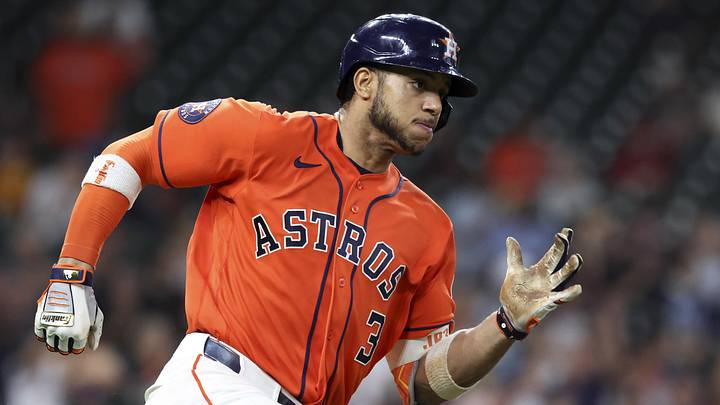
Other pieces, Jeremy Peña in particular, have a shorter shelf life. The Astros missed the boat on extending the star shortstop. With him hitting free agency after next season, his trade value is nearing an inflection point.
Astros insider Chandler Rome sees this playing out in a familiar way. The beat writer believes that, given the club's position on selling at the deadline, it could take the same approach with Peña that it did with Kyle Tucker.
The Astros could follow the Kyle Tucker route with Jeremy Peña, but it will be walking a tightrope
The Astros knew that they had no chance to re-sign Tucker heading into his final season of team control, and decided that by selling Tucker, they could receive much more value than the comp pick they'd get when he'd inevitably reject a qualifying offer.
Receiving Cam Smith, Isaac Paredes, and Hayden Wesneski earned Houston near-universal praise, and while the value of those assets may have taken a hit in the aftermath, so too has Tucker. What matters is the value of those chips at the time of the deal.
With Peña, they could hope for the same. Theoretically, there would be more suitors bidding over the star shortstop in the offseason when clubs are filled with hope and the question of contender or pretender has not yet been answered.
On the other hand, trading Peña at the deadline now would allow for Houston to capitalize on the desperation factor. With the data of more than half the season behind us, the true contenders will have separated themselves from the pretenders, and if there's a roster hole at shortstop that stands between them and a World Series trophy, an overwhelming sense of urgency may take hold and give the Astros the upper hand in negotiations.
Injuries play a role, too, and perhaps nothing could drive buying decisions among the crop of top contenders more than the loss of a key contributor to the IL for an extended period of time. See the Astros move for Carlos Correa a year ago in the wake of Isaac Paredes' injury for a prime example.
Then again, there's no guarantee that those conditions will exist at this year's deadline. We can speculate that certain teams, like the New York Yankees or the Los Angeles Dodgers, could use a player like Peña to stabilize their shortstop positions, but there's no guarantee that they can't find other solutions between now and August 3.
In the offseason, teams are more intentional and less reactive. So while the 28-year-old will have a half-season less of team control, a team would be making a play for him because it decided that it can't live without him, rather than simply responding to in-season conditions.
There's a chance that Houston can find its way back into contention behind the returning Hunter Brown and then sell Peña for a premium this offseason. That's walking a tight-rope, though, and could cost the team leverage in negotiations by capitalizing on the desperation of opposing teams, plus being able to play the waiting game card. One way or another, it seems like Peña's exit from the Astros is coming sooner rather than later.
 Add us as a preferred source on Google