%20%20--%3E%0A%3Csvg%20version%3D%221.1%22%20xmlns%3D%22http%3A%2F%2Fwww.w3.org%2F2000%2Fsvg%22%20xmlns%3Axlink%3D%22http%3A%2F%2Fwww.w3.org%2F1999%2Fxlink%22%20x%3D%220px%22%20y%3D%220px%22%0A%09%20viewBox%3D%220%200%201055.1%20200%22%20style%3D%22enable-background%3Anew%200%200%201055.1%20200%3B%22%20xml%3Aspace%3D%22preserve%22%3E%0A%3Cstyle%20type%3D%22text%2Fcss%22%3E%0A%09.st0%7Bfill%3A%23231F20%3B%7D%0A%09.st1%7Bfill%3A%230E203C%3B%7D%0A%09.st2%7Bfill%3A%23EC4324%3B%7D%0A%09.st3%7Bfill%3A%23FFFFFF%3B%7D%0A%3C%2Fstyle%3E%0A%3Cg%20id%3D%22Template%22%3E%0A%3C%2Fg%3E%0A%3Cg%20id%3D%22Layer_2%22%3E%0A%09%3Cpath%20class%3D%22st3%22%20d%3D%22M58.3%2C200.3h82.4c12.4%2C0%2C21.7-1.5%2C28-4.5c20.2-9.6%2C30.2-26.1%2C30.2-49.3c0-3.2-0.2-9.3-0.6-18.3h-65.1v14.9%0A%09%09c-0.9%2C3.9-3.4%2C5.8-7.5%2C5.8H73.2c-5%2C0-7.5-2.5-7.5-7.5V59.2c0-5%2C2.5-7.5%2C7.5-7.5h52.5c5%2C0%2C7.5%2C2.1%2C7.5%2C6.4v10.8h65.7V55.7%0A%09%09c0-16.3-3.8-28.3-11.4-36.1c-8.8-12.9-24.7-19.3-47.4-19.3H58.9C47%2C0.3%2C38%2C1.7%2C32%2C4.3c-21.3%2C9-32%2C26.1-32%2C51.4v88%0A%09%09c0%2C16.5%2C3.6%2C28.7%2C10.9%2C36.6C20.1%2C193.7%2C35.9%2C200.3%2C58.3%2C200.3z%22%2F%3E%0A%09%3Cpolygon%20class%3D%22st3%22%20points%3D%22596.6%2C64%20596.6%2C0.8%20400.1%2C0.8%20400.1%2C64%20442.7%2C64%20442.7%2C51.3%20466.1%2C51.3%20466.1%2C148.1%20442.1%2C148.1%20%0A%09%09442.1%2C199.9%20554.8%2C199.9%20554.8%2C148.1%20531.5%2C148.1%20531.5%2C51.4%20554.8%2C51.4%20554.8%2C64%20%09%22%2F%3E%0A%09%3Cpolygon%20class%3D%22st3%22%20points%3D%22942.4%2C148.5%20942.4%2C200.2%201055.1%2C200.2%201055.1%2C148.5%201031.8%2C148.5%201031.8%2C51.2%201055.1%2C51.2%201055.1%2C0.8%20%0A%09%09943.1%2C0.8%20943.1%2C51.3%20966.3%2C51.3%20966.3%2C80%20888.9%2C80%20888.9%2C51.3%20912.6%2C51.3%20912.6%2C0.5%20800.1%2C0.8%20800.1%2C51.4%20823.5%2C51.4%20823.5%2C148.6%20%0A%09%09800.1%2C148.6%20800.1%2C200.1%20912.6%2C200.1%20912.6%2C148.6%20888.9%2C148.6%20888.9%2C116.4%20966.3%2C116.4%20966.3%2C148.5%20%09%22%2F%3E%0A%09%3Cpolygon%20class%3D%22st2%22%20points%3D%22315.5%2C83.9%20299.6%2C34.9%20283.7%2C83.9%20232.2%2C83.9%20273.9%2C114.1%20258%2C163.1%20299.6%2C132.8%20341.3%2C163.1%20%0A%09%09325.4%2C114.1%20367%2C83.9%20%09%22%2F%3E%0A%09%3Cpolygon%20class%3D%22st2%22%20points%3D%22715.6%2C83.9%20699.7%2C34.9%20683.8%2C83.9%20632.3%2C83.9%20674%2C114.1%20658%2C163.1%20699.7%2C132.8%20741.3%2C163.1%20%0A%09%09725.4%2C114.1%20767.1%2C83.9%20%09%22%2F%3E%0A%3C%2Fg%3E%0A%3C%2Fsvg%3E%0A)

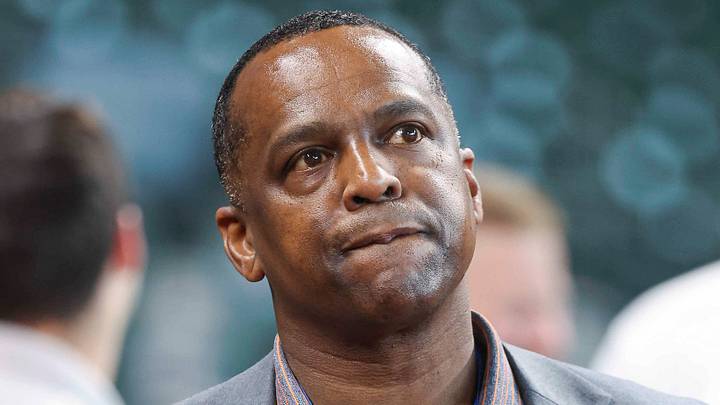
The Dana Brown era has come to a close as the Houston Astros and the embattled executive mutually agreed to part ways. The only thing surprising about the decision was the timing. At the time of the divorce the Astros were in first place in the AL West, and had just finished running Houston's draft and trade deadline.
Brown arrived on the scene in January of 2023 and promised to lock up the Astros young stars. As it turns out, that was mostly an empty promise. He never arrived at an extension for Kyle Tucker and ultimately traded him away during his final season of team control. His tenure will come to an end with deals for Hunter Brown or Jeremy Peña. Instead, he came to agreements on extensions with Cristian Javier and Jose Altuve.
Ultimately, the Brown era began with a lot of promise, but ended mostly in disappointment. He made several misteps along the way, and the four biggest will continue to shape Houston's future.
Dana Brown made four major mistakes during his Astros tenure that proved costly
Signing Christian Walker
Brown was not responsible for the Jose Abreu debacle; it was Jim Crane who made the three-year, $58.5 million blunder, but it was Brown who cleaned up the mess and cut ties with Abreu in June of 2024. That's what makes the signing of Christian Walker just a few months later so much worse.
Brown giving Walker, another mid-30s power-hitting first baseman, virtually the same deal, three-years, $60 million is ironic. Walker has yet to bottom out quite as bad as Abreu did, but he's still very much an underwater asset. While his overall numbers look bit better than last year's struggle, they are a bit inflated by his hot first month. Since June 1, Walker is hitting just .219/.296/.372 over 270 plate appearances.
Trading for Carlos Correa
Trading for Carlos Correa at last year's trade deadline felt like a panic move as the injury bug swallowed the Astros whole. Isaac Paredes got hurt shortly before the trade deadline, and it seemed that Brown prioritized finding a replacement for him over other, more pressing needs.
That would have been fine if Correa was a rental, but instead, he's on the books through at least 2028 and possibly until 2032 if a series of vesting options hit. The move showed little foresight, as it then created an unnecessary infield logjam and took up valuable payroll that could have been used over this past offseason to fix the starting rotation.
The logjam has resolved itself, but only because Correa is injured. Again. He's still a good player, when healthy, but his presence on the roster has prevented and will continue to prevent more pressing needs from being met.
Signing Tatsuya Imai
Desperately needing help in the starting rotation, Brown took a number of gambles coming into the 2026 season. Guys like Nate Pearson and Ryan Weiss were low-risk, but low-probability dice rolls, but then there was Tatsuya Imai. Imai was an exciting unknown, but the first red flag was when he was forced to settle for a three-year, $54 million deal with the Astros after being expected to land a contract in the neighborhood of $150-plus million.
Imai has been an unmitigated disaster, and we can certainly quibble with the idea of betting on such a relatively expensive commodity, given how unproven he was, as the biggest move to try to solidify the rotation. Instead, the worst part of the deal is how it is structured. Brown gave Imai escalators to bring the total value up to $63 million and also included opt-outs after every season.
Essentially, he made a lose-lose deal for the Astros. If Imai was good, he would opt out, and they likely can't afford to bring him back at a higher rate. If he's bad, as he's been, they're stuck paying him a pretty hefty chunk of change, which then prevents them from actually solving the rotation with a more reliable option.
Extending Jose Altuve
Let's be fair and point out that this was an impossible position for Brown to be in. Altuve has been the face of the modern Astros, led the team through its most productive period in franchise history, and is one of the most likable players in the game.
With that said, the diminutive second baseman had a lot of miles on his body and doesn't necessarily have the physicality to hold up over time. What we've seen over the past couple of seasons has been Altuve's inevitable decline. It's a struggle for the 36-year-old to crack a .700 OPS, but he'll count as $25 million against the luxury tax for the next three seasons.
The real issue here is that this compounds with the other errors. You could afford overspending on a franchise legend if you were prudent in your other dealings, but Brown has not done that. Paying all of this money to aging, declining, and, in the case of Imai, unproven players has made it impossible for the Astros to extend a guy like Peña, who is a rising star in his prime, or go out on the free-agent market to add impact talent. It's no surprise, then, that Brown had to go.
 Add us as a preferred source on Google