%20%20--%3E%0A%3Csvg%20version%3D%221.1%22%20xmlns%3D%22http%3A%2F%2Fwww.w3.org%2F2000%2Fsvg%22%20xmlns%3Axlink%3D%22http%3A%2F%2Fwww.w3.org%2F1999%2Fxlink%22%20x%3D%220px%22%20y%3D%220px%22%0A%09%20viewBox%3D%220%200%201055.1%20200%22%20style%3D%22enable-background%3Anew%200%200%201055.1%20200%3B%22%20xml%3Aspace%3D%22preserve%22%3E%0A%3Cstyle%20type%3D%22text%2Fcss%22%3E%0A%09.st0%7Bfill%3A%23231F20%3B%7D%0A%09.st1%7Bfill%3A%230E203C%3B%7D%0A%09.st2%7Bfill%3A%23EC4324%3B%7D%0A%09.st3%7Bfill%3A%23FFFFFF%3B%7D%0A%3C%2Fstyle%3E%0A%3Cg%20id%3D%22Template%22%3E%0A%3C%2Fg%3E%0A%3Cg%20id%3D%22Layer_2%22%3E%0A%09%3Cpath%20class%3D%22st3%22%20d%3D%22M58.3%2C200.3h82.4c12.4%2C0%2C21.7-1.5%2C28-4.5c20.2-9.6%2C30.2-26.1%2C30.2-49.3c0-3.2-0.2-9.3-0.6-18.3h-65.1v14.9%0A%09%09c-0.9%2C3.9-3.4%2C5.8-7.5%2C5.8H73.2c-5%2C0-7.5-2.5-7.5-7.5V59.2c0-5%2C2.5-7.5%2C7.5-7.5h52.5c5%2C0%2C7.5%2C2.1%2C7.5%2C6.4v10.8h65.7V55.7%0A%09%09c0-16.3-3.8-28.3-11.4-36.1c-8.8-12.9-24.7-19.3-47.4-19.3H58.9C47%2C0.3%2C38%2C1.7%2C32%2C4.3c-21.3%2C9-32%2C26.1-32%2C51.4v88%0A%09%09c0%2C16.5%2C3.6%2C28.7%2C10.9%2C36.6C20.1%2C193.7%2C35.9%2C200.3%2C58.3%2C200.3z%22%2F%3E%0A%09%3Cpolygon%20class%3D%22st3%22%20points%3D%22596.6%2C64%20596.6%2C0.8%20400.1%2C0.8%20400.1%2C64%20442.7%2C64%20442.7%2C51.3%20466.1%2C51.3%20466.1%2C148.1%20442.1%2C148.1%20%0A%09%09442.1%2C199.9%20554.8%2C199.9%20554.8%2C148.1%20531.5%2C148.1%20531.5%2C51.4%20554.8%2C51.4%20554.8%2C64%20%09%22%2F%3E%0A%09%3Cpolygon%20class%3D%22st3%22%20points%3D%22942.4%2C148.5%20942.4%2C200.2%201055.1%2C200.2%201055.1%2C148.5%201031.8%2C148.5%201031.8%2C51.2%201055.1%2C51.2%201055.1%2C0.8%20%0A%09%09943.1%2C0.8%20943.1%2C51.3%20966.3%2C51.3%20966.3%2C80%20888.9%2C80%20888.9%2C51.3%20912.6%2C51.3%20912.6%2C0.5%20800.1%2C0.8%20800.1%2C51.4%20823.5%2C51.4%20823.5%2C148.6%20%0A%09%09800.1%2C148.6%20800.1%2C200.1%20912.6%2C200.1%20912.6%2C148.6%20888.9%2C148.6%20888.9%2C116.4%20966.3%2C116.4%20966.3%2C148.5%20%09%22%2F%3E%0A%09%3Cpolygon%20class%3D%22st2%22%20points%3D%22315.5%2C83.9%20299.6%2C34.9%20283.7%2C83.9%20232.2%2C83.9%20273.9%2C114.1%20258%2C163.1%20299.6%2C132.8%20341.3%2C163.1%20%0A%09%09325.4%2C114.1%20367%2C83.9%20%09%22%2F%3E%0A%09%3Cpolygon%20class%3D%22st2%22%20points%3D%22715.6%2C83.9%20699.7%2C34.9%20683.8%2C83.9%20632.3%2C83.9%20674%2C114.1%20658%2C163.1%20699.7%2C132.8%20741.3%2C163.1%20%0A%09%09725.4%2C114.1%20767.1%2C83.9%20%09%22%2F%3E%0A%3C%2Fg%3E%0A%3C%2Fsvg%3E%0A)

The Houston Astros went into the offseason with a plan. With an aging and expensive roster, as well as a budget in mind, GM Dana Brown went to work reshaping a roster that had longed for an infusion of young talent, which it had largely been cut off from thanks to the penalties from the 2017 sign-stealing scandal. This wasn't a teardown, however, but rather a retooling effort that the club hoped would allow them to balance competing and building for the future at the same time.
The season's early going showed some growing pains, but the Astros would snap out of an early funk and then weather a prolific injury storm that saw them scrambling to make things work, all while holding onto first place in the AL West most of the way.
Now, with the season winding down and Houston in a three-way battle with the Seattle Mariners and Texas Rangers for the division crown, they are looking back at some of those offseason decisions and thinking that they just ight cost them in the short-term and impede them from achieving their October dreams.
3 decisions that could prove costly to the Astros in their quest for a postseason run
Astros fail to effectively upgrade the starting rotation
The Astros have one of, if not the best, one-two punches atop their starting rotation in Hunter Brown and Framber Valdez; however, back in the offseason, that wasn't exactly clear. Brown had a good 2024 campaign in his second full season, but hadn't emerged as the Cy Young frontrunner that he is today.
Regardless, the depth behind the two of them was a question mark, with the club counting on the likes of Lance McCullers Jr. to be a factor despite the 31-year-old last pitching in 2022 thanks to a litany of injuries and setbacks. Predictably, McCullers Jr. has been bounced from the rotation and owns a 6.97 ERA through 50.1 innings pitched this season.
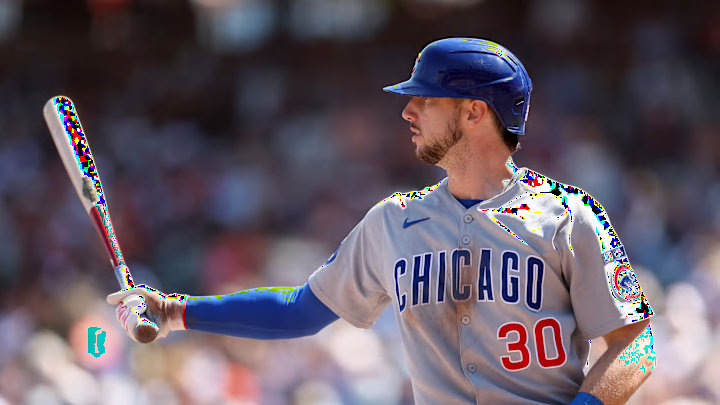
The only "significant" addition to the rotation came in the form of Hayden Wesneski, who was acquired from the Chicago Cubs in the Kyle Tucker trade. The 27-year-old had never made more than 11 starts in a single season, failing to establish himself as a viable rotation option for the Cubs, and went down in May with a torn UCL requiring season-ending Tommy John surgery this season with Houston.
No one can truly predict injuries, but the lack of depth the Astros opened the season with in their starting rotation has made the third through fifth spots a never-ending carousel, with 14 different pitchers starting at least one game for the club. As it currently stands, it's unclear who the third and fourth starters should be for Houston in their four-man playoff rotation.
Astros trade Kyle Tucker to Cubs during the offseason
Long term, the Kyle Tucker trade could still work out for the Astros, but as far as their playoff objectives go, it has been a total negative. As mentioned before, Wesneski was lost for the year relatively early on, and for a variety of reasons, the other two pieces of the return package might not be factors in October.
Isaac Paredes landing on the IL on July 20 seemed to end his season, forcing the Astros to go out and reunite with Carlos Correa in a deadline deal with the Minnesota Twins in order to cover the hot corner. Recent updates make it look like Paredes might be able to return before the end of the season after all, but without the necessary surgery to repair his torn hamstring, it's questionable whether or not he can make a real difference in the lineup, let alone where he might actually play.
As for Cam Smith, the jewel of the deal, the 22-year-old rookie has had an up-and-down season and has seen his playing time become more sporadic down the stretch. He isn't a lock to make the postseason roster, though that shouldn't serve as an indictment of his future outlook.
The bottom line is, Kyle Tucker, now in Chicago, is doing what he did for years with the Astros, while all three pieces Houston received in return might not have roles come October. That doesn't make the trade a complete loss, but for 2025's purposes, it hasn't helped much.
Astros chose the wrong first baseman after signing Christian Walker
After three dreadful months to begin the season, Christian Walker seemed to find his groove, posting an .833 OPS in July and an .829 OPS in August. However, in September, that mark has fallen to just .574 through 9/11.
The Astros have long had issues finding production at first base, and while Walker was coming off a very productive three-year period with the Arizona Diamondbacks, which saw him crush 95 dingers in that time span.
Still, Walker was a bit of a curious signing as the Astros' lone big free-agent splash. Committing to him for three years at $20 million per when he was entering his age-34 season didn't seem to jive with the youth movement that was going on elsewhere in the roster.
If the Astros wanted a veteran presence at first, there were other options who could've been had for one-year deals. If they wanted to get younger, there were options on the trade market, like the left-handed-hitting Josh Naylor and Nathaniel Lowe, who would've brought more balance to Houston's right-handed-heavy lineup. Going with a younger option and then committing to an extension may have made more sense.
Instead, the Astros are locked into Walker for the foreseeable future, and given the shakiness of his 2025 campaign, it's not clear he can be a positive force in October.
More Houston Astros News and Rumors
 Add us as a preferred source on Google