%20%20--%3E%0A%3Csvg%20version%3D%221.1%22%20xmlns%3D%22http%3A%2F%2Fwww.w3.org%2F2000%2Fsvg%22%20xmlns%3Axlink%3D%22http%3A%2F%2Fwww.w3.org%2F1999%2Fxlink%22%20x%3D%220px%22%20y%3D%220px%22%0A%09%20viewBox%3D%220%200%201055.1%20200%22%20style%3D%22enable-background%3Anew%200%200%201055.1%20200%3B%22%20xml%3Aspace%3D%22preserve%22%3E%0A%3Cstyle%20type%3D%22text%2Fcss%22%3E%0A%09.st0%7Bfill%3A%23231F20%3B%7D%0A%09.st1%7Bfill%3A%230E203C%3B%7D%0A%09.st2%7Bfill%3A%23EC4324%3B%7D%0A%09.st3%7Bfill%3A%23FFFFFF%3B%7D%0A%3C%2Fstyle%3E%0A%3Cg%20id%3D%22Template%22%3E%0A%3C%2Fg%3E%0A%3Cg%20id%3D%22Layer_2%22%3E%0A%09%3Cpath%20class%3D%22st3%22%20d%3D%22M58.3%2C200.3h82.4c12.4%2C0%2C21.7-1.5%2C28-4.5c20.2-9.6%2C30.2-26.1%2C30.2-49.3c0-3.2-0.2-9.3-0.6-18.3h-65.1v14.9%0A%09%09c-0.9%2C3.9-3.4%2C5.8-7.5%2C5.8H73.2c-5%2C0-7.5-2.5-7.5-7.5V59.2c0-5%2C2.5-7.5%2C7.5-7.5h52.5c5%2C0%2C7.5%2C2.1%2C7.5%2C6.4v10.8h65.7V55.7%0A%09%09c0-16.3-3.8-28.3-11.4-36.1c-8.8-12.9-24.7-19.3-47.4-19.3H58.9C47%2C0.3%2C38%2C1.7%2C32%2C4.3c-21.3%2C9-32%2C26.1-32%2C51.4v88%0A%09%09c0%2C16.5%2C3.6%2C28.7%2C10.9%2C36.6C20.1%2C193.7%2C35.9%2C200.3%2C58.3%2C200.3z%22%2F%3E%0A%09%3Cpolygon%20class%3D%22st3%22%20points%3D%22596.6%2C64%20596.6%2C0.8%20400.1%2C0.8%20400.1%2C64%20442.7%2C64%20442.7%2C51.3%20466.1%2C51.3%20466.1%2C148.1%20442.1%2C148.1%20%0A%09%09442.1%2C199.9%20554.8%2C199.9%20554.8%2C148.1%20531.5%2C148.1%20531.5%2C51.4%20554.8%2C51.4%20554.8%2C64%20%09%22%2F%3E%0A%09%3Cpolygon%20class%3D%22st3%22%20points%3D%22942.4%2C148.5%20942.4%2C200.2%201055.1%2C200.2%201055.1%2C148.5%201031.8%2C148.5%201031.8%2C51.2%201055.1%2C51.2%201055.1%2C0.8%20%0A%09%09943.1%2C0.8%20943.1%2C51.3%20966.3%2C51.3%20966.3%2C80%20888.9%2C80%20888.9%2C51.3%20912.6%2C51.3%20912.6%2C0.5%20800.1%2C0.8%20800.1%2C51.4%20823.5%2C51.4%20823.5%2C148.6%20%0A%09%09800.1%2C148.6%20800.1%2C200.1%20912.6%2C200.1%20912.6%2C148.6%20888.9%2C148.6%20888.9%2C116.4%20966.3%2C116.4%20966.3%2C148.5%20%09%22%2F%3E%0A%09%3Cpolygon%20class%3D%22st2%22%20points%3D%22315.5%2C83.9%20299.6%2C34.9%20283.7%2C83.9%20232.2%2C83.9%20273.9%2C114.1%20258%2C163.1%20299.6%2C132.8%20341.3%2C163.1%20%0A%09%09325.4%2C114.1%20367%2C83.9%20%09%22%2F%3E%0A%09%3Cpolygon%20class%3D%22st2%22%20points%3D%22715.6%2C83.9%20699.7%2C34.9%20683.8%2C83.9%20632.3%2C83.9%20674%2C114.1%20658%2C163.1%20699.7%2C132.8%20741.3%2C163.1%20%0A%09%09725.4%2C114.1%20767.1%2C83.9%20%09%22%2F%3E%0A%3C%2Fg%3E%0A%3C%2Fsvg%3E%0A)

Last year marked the first season since 2016 that the Astros failed to make the playoffs. A dominant stretch marked by two World Series wins and seven consecutive visits to the ALCS finally drew to a close, and it's unclear whether Houston will be able to return to the same heights any time soon.
A major part of this recent downward trend is a lack of compelling roster talent. When it comes to free agents, many of the team's most recent contracts simply haven't panned out. The contracts of Christian Walker and José Abreu were particularly disappointing, and the Josh Hader deal has been the only other free agent signing of note since Houston won the World Series in 2022.
Additionally, a franchise that used to pride itself on maintaining a homegrown core of superstars has struggled to replace those same players as they've gotten older or left. To make matters worse, it's a trend that may continue in the near future if the franchise doesn't make some big changes.
The Astros will have to reassess their spending limitations if they want to remain World Series contenders
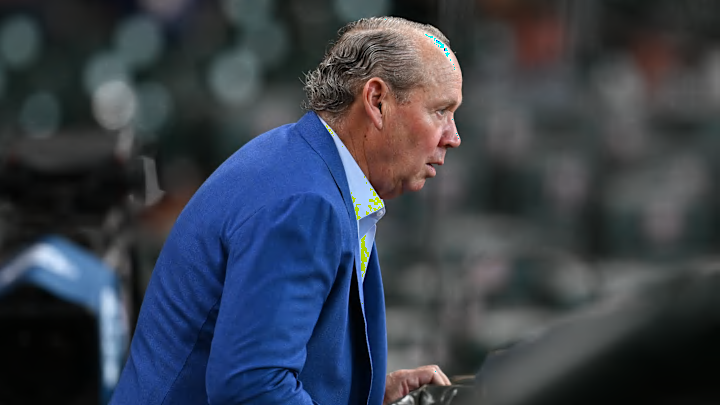
Houston is far from being a frugal team, but for years, there has been a threshold that owner Jim Crane has been unwilling to cross. The organization has always been averse to the luxury tax, and it's a sentiment that Crane reiterated even after signing free agent Tatsuya Imai.
It may seem greedy to ask a team that consistently has a top-ten payroll to spend even more, but the past few years have marked a major inflection point in the way that money is spent. The Astros are projected to have a luxury tax payroll of $239.2 million in 2026 per Cot's Contracts, but this pales in comparison to the Dodgers, who have an estimated payroll north of $400 million for next season, thanks to the gargantuan $240 million contract they extended to Astros alumnus Kyle Tucker.
While Houston has been reluctant to cross the luxury tax threshold, Los Angeles has completely blown it out of the water, signing the best free agents available every offseason and winning three World Series in the past six years, with a fourth seemingly well on the way.
The Astros often try to get ahead of free agent spending by extending in-house talent, but they've even struggled to do that as of late. This offseason seems like it'll be characterized more by fiscally conservative moves than ones that move the needle, but even if winning on the margins somehow results in another division title, it doesn't seem like nearly enough to give the team meaningful championship equity.
Jim Crane isn't the only owner who's hesitant to increase spending, and he's far from the most spending-averse. In fact, the introduction of a salary cap will be a hotly-debated topic after the conclusion of the 2026 season when it comes time to create a new Collective Bargaining Agreement. If the owners fail to curb the spending of the upper echelon of teams, the Astros will be one of many organizations forced to make a decision. They can either stay the course and hope the power of friendship is sufficient to play winning baseball, or they can loosen the purse strings.
For a team that was on top of the baseball world just four years ago, it's a strange predicament to be in, but it's a testament to how quickly things can change if organizations fail to adapt. The Astros have always done things their own way, sometimes to a fault, but the economy of baseball is different now. It may not be an ideal situation for ownership, but as the adage goes, "if you can't beat 'em, join 'em."
 Add us as a preferred source on Google