%20%20--%3E%0A%3Csvg%20version%3D%221.1%22%20xmlns%3D%22http%3A%2F%2Fwww.w3.org%2F2000%2Fsvg%22%20xmlns%3Axlink%3D%22http%3A%2F%2Fwww.w3.org%2F1999%2Fxlink%22%20x%3D%220px%22%20y%3D%220px%22%0A%09%20viewBox%3D%220%200%201055.1%20200%22%20style%3D%22enable-background%3Anew%200%200%201055.1%20200%3B%22%20xml%3Aspace%3D%22preserve%22%3E%0A%3Cstyle%20type%3D%22text%2Fcss%22%3E%0A%09.st0%7Bfill%3A%23231F20%3B%7D%0A%09.st1%7Bfill%3A%230E203C%3B%7D%0A%09.st2%7Bfill%3A%23EC4324%3B%7D%0A%09.st3%7Bfill%3A%23FFFFFF%3B%7D%0A%3C%2Fstyle%3E%0A%3Cg%20id%3D%22Template%22%3E%0A%3C%2Fg%3E%0A%3Cg%20id%3D%22Layer_2%22%3E%0A%09%3Cpath%20class%3D%22st3%22%20d%3D%22M58.3%2C200.3h82.4c12.4%2C0%2C21.7-1.5%2C28-4.5c20.2-9.6%2C30.2-26.1%2C30.2-49.3c0-3.2-0.2-9.3-0.6-18.3h-65.1v14.9%0A%09%09c-0.9%2C3.9-3.4%2C5.8-7.5%2C5.8H73.2c-5%2C0-7.5-2.5-7.5-7.5V59.2c0-5%2C2.5-7.5%2C7.5-7.5h52.5c5%2C0%2C7.5%2C2.1%2C7.5%2C6.4v10.8h65.7V55.7%0A%09%09c0-16.3-3.8-28.3-11.4-36.1c-8.8-12.9-24.7-19.3-47.4-19.3H58.9C47%2C0.3%2C38%2C1.7%2C32%2C4.3c-21.3%2C9-32%2C26.1-32%2C51.4v88%0A%09%09c0%2C16.5%2C3.6%2C28.7%2C10.9%2C36.6C20.1%2C193.7%2C35.9%2C200.3%2C58.3%2C200.3z%22%2F%3E%0A%09%3Cpolygon%20class%3D%22st3%22%20points%3D%22596.6%2C64%20596.6%2C0.8%20400.1%2C0.8%20400.1%2C64%20442.7%2C64%20442.7%2C51.3%20466.1%2C51.3%20466.1%2C148.1%20442.1%2C148.1%20%0A%09%09442.1%2C199.9%20554.8%2C199.9%20554.8%2C148.1%20531.5%2C148.1%20531.5%2C51.4%20554.8%2C51.4%20554.8%2C64%20%09%22%2F%3E%0A%09%3Cpolygon%20class%3D%22st3%22%20points%3D%22942.4%2C148.5%20942.4%2C200.2%201055.1%2C200.2%201055.1%2C148.5%201031.8%2C148.5%201031.8%2C51.2%201055.1%2C51.2%201055.1%2C0.8%20%0A%09%09943.1%2C0.8%20943.1%2C51.3%20966.3%2C51.3%20966.3%2C80%20888.9%2C80%20888.9%2C51.3%20912.6%2C51.3%20912.6%2C0.5%20800.1%2C0.8%20800.1%2C51.4%20823.5%2C51.4%20823.5%2C148.6%20%0A%09%09800.1%2C148.6%20800.1%2C200.1%20912.6%2C200.1%20912.6%2C148.6%20888.9%2C148.6%20888.9%2C116.4%20966.3%2C116.4%20966.3%2C148.5%20%09%22%2F%3E%0A%09%3Cpolygon%20class%3D%22st2%22%20points%3D%22315.5%2C83.9%20299.6%2C34.9%20283.7%2C83.9%20232.2%2C83.9%20273.9%2C114.1%20258%2C163.1%20299.6%2C132.8%20341.3%2C163.1%20%0A%09%09325.4%2C114.1%20367%2C83.9%20%09%22%2F%3E%0A%09%3Cpolygon%20class%3D%22st2%22%20points%3D%22715.6%2C83.9%20699.7%2C34.9%20683.8%2C83.9%20632.3%2C83.9%20674%2C114.1%20658%2C163.1%20699.7%2C132.8%20741.3%2C163.1%20%0A%09%09725.4%2C114.1%20767.1%2C83.9%20%09%22%2F%3E%0A%3C%2Fg%3E%0A%3C%2Fsvg%3E%0A)

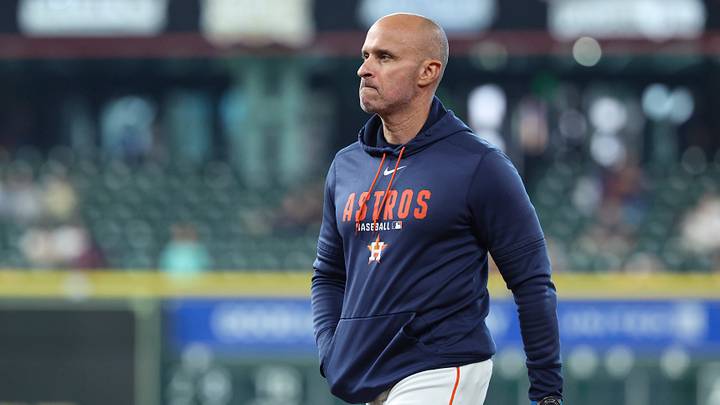
One of the more difficult things to capture is nuance. We live in a hot take world, and in that hot take world there is little room for nuance. In the case of the Houston Astros, more than one thing can be true at the same time. Yes, the team could be in position to take the AL West division. Yes, it has been a difficult year in terms of injuries and underperformance from certain key players. Yes, there have also been problems in the manager's chair. All of these things can be true at the same time.
We should start with the first part of that line of thinking. The Astros hold a two game lead in a division where none of the teams have a positive run differential. If the Astros hold serve for the rest of the season they will finish 82-80. Given what the Texas Rangers and Seattle Mariners have done, that might be good enough to win the AL West. We can put the banner on the stadium wall and we can feel good about weathering the storm enough to advance to October, but this organization has not built up the fan's collective expectations only to accept mediocrity.
The injuries and underperformance is another area where it is way too easy to give the manager a pass. Are there things that the manager does that make injuries more likely? For instance, does going a little longer with a pitcher or pitching him multiple days in a row make him more susceptible to an arm injury? Can managers manage their bench in a more strategic way to keep guys fresh? Moreover, how much input do they normally have in the procedures and processes of getting physically able to play? How do they manage Spring Training to make sure players are ready to go when the opening bell is rung?
Managers do not radically change the fates of their teams. No manager turns an 80 win squad into a 100 win squad and anyone suggesting as such is foolish. The extremes probably lie at around five games either direction. It is more likely that they may impact around three in one net direction or another. Why is this? Sometimes their moves work out and sometimes they don't. Sometimes the wrong move works and sometimes the right move doesn't work. One example might be all the pinch hitting in Sunday's gave vs. Arizona. You pinch hit for Cam Smith with a player that his hitting under .100 since August 15th. Did that cost you the game? Well, you'd have to factor in Smith's likelihood for success in that moment. Someone else's failure doesn't mean the alternative would have worked.
The Astros would be in a much different and much better position if they were just three games better in their record.
So, let's say the Astros go from 72-70 to 75-67. Those three games mean that the Mariners are all but eliminated from the division and you have some breathing room with the Rangers at five games. It also means you can manage the last few weeks differently. You don't have to sweat every single game. You can set up your postseason rotation just the way you want it. You can make sure your regulars are healthy going in. You can manage your bullpen in such a way that they have gas in the tank. None of those are possible because you have to go pedal to the metal. That's the difference between a good manager and Joe Espada.
The most important reason to move on is that you have to have synergy between your general manager and manager. This gives the Astros the first opportunity since 2015 to actually sync this up correctly. When the manager and general manager share the same philosophy, they use the 26 man roster to its maximum efficiency. We have seen when this doesn't work. It is high time that it actually works again. An analytical general manager should hire a manager knowledgeable in analytics. There should be a back and forth where they sync up on who should be on the roster and who shouldn't be. There also should be a synergy on how players should be handled.
For instance, why wasn't there a cohesive plan on how to handle Tatsuya Imai? Why wasn't there more coordination in how he would be acclimated to the American game? American culture? Clubhouse culture? While recent reporting is that some of these concerns have subsided, precious time was wasted on things that should have been thought about from the get go. Yes, Dana Brown is responsible for much of that and yes he is gone, but Espada should not escape all accountability on that front.
Add up all of the questionable decisions and the recent reports that the Astros have already made up their mind on Espada make a ton of sense. Remember, more than one thing can be true at the same time. You can acknowledge that a manager has done some things well. You can acknowledge that he is seemingly a good guy that is well liked in the clubhouse. You can acknowledge that he is a good baseball man that should have a job somewhere. We can acknowledge all of that while acknowledging that it just hasn't been good enough here. We can acknowledge all of that while acknowledging that we can do better. It is time for the Astros to do better.
 Add us as a preferred source on Google