%20%20--%3E%0A%3Csvg%20version%3D%221.1%22%20xmlns%3D%22http%3A%2F%2Fwww.w3.org%2F2000%2Fsvg%22%20xmlns%3Axlink%3D%22http%3A%2F%2Fwww.w3.org%2F1999%2Fxlink%22%20x%3D%220px%22%20y%3D%220px%22%0A%09%20viewBox%3D%220%200%201055.1%20200%22%20style%3D%22enable-background%3Anew%200%200%201055.1%20200%3B%22%20xml%3Aspace%3D%22preserve%22%3E%0A%3Cstyle%20type%3D%22text%2Fcss%22%3E%0A%09.st0%7Bfill%3A%23231F20%3B%7D%0A%09.st1%7Bfill%3A%230E203C%3B%7D%0A%09.st2%7Bfill%3A%23EC4324%3B%7D%0A%09.st3%7Bfill%3A%23FFFFFF%3B%7D%0A%3C%2Fstyle%3E%0A%3Cg%20id%3D%22Template%22%3E%0A%3C%2Fg%3E%0A%3Cg%20id%3D%22Layer_2%22%3E%0A%09%3Cpath%20class%3D%22st3%22%20d%3D%22M58.3%2C200.3h82.4c12.4%2C0%2C21.7-1.5%2C28-4.5c20.2-9.6%2C30.2-26.1%2C30.2-49.3c0-3.2-0.2-9.3-0.6-18.3h-65.1v14.9%0A%09%09c-0.9%2C3.9-3.4%2C5.8-7.5%2C5.8H73.2c-5%2C0-7.5-2.5-7.5-7.5V59.2c0-5%2C2.5-7.5%2C7.5-7.5h52.5c5%2C0%2C7.5%2C2.1%2C7.5%2C6.4v10.8h65.7V55.7%0A%09%09c0-16.3-3.8-28.3-11.4-36.1c-8.8-12.9-24.7-19.3-47.4-19.3H58.9C47%2C0.3%2C38%2C1.7%2C32%2C4.3c-21.3%2C9-32%2C26.1-32%2C51.4v88%0A%09%09c0%2C16.5%2C3.6%2C28.7%2C10.9%2C36.6C20.1%2C193.7%2C35.9%2C200.3%2C58.3%2C200.3z%22%2F%3E%0A%09%3Cpolygon%20class%3D%22st3%22%20points%3D%22596.6%2C64%20596.6%2C0.8%20400.1%2C0.8%20400.1%2C64%20442.7%2C64%20442.7%2C51.3%20466.1%2C51.3%20466.1%2C148.1%20442.1%2C148.1%20%0A%09%09442.1%2C199.9%20554.8%2C199.9%20554.8%2C148.1%20531.5%2C148.1%20531.5%2C51.4%20554.8%2C51.4%20554.8%2C64%20%09%22%2F%3E%0A%09%3Cpolygon%20class%3D%22st3%22%20points%3D%22942.4%2C148.5%20942.4%2C200.2%201055.1%2C200.2%201055.1%2C148.5%201031.8%2C148.5%201031.8%2C51.2%201055.1%2C51.2%201055.1%2C0.8%20%0A%09%09943.1%2C0.8%20943.1%2C51.3%20966.3%2C51.3%20966.3%2C80%20888.9%2C80%20888.9%2C51.3%20912.6%2C51.3%20912.6%2C0.5%20800.1%2C0.8%20800.1%2C51.4%20823.5%2C51.4%20823.5%2C148.6%20%0A%09%09800.1%2C148.6%20800.1%2C200.1%20912.6%2C200.1%20912.6%2C148.6%20888.9%2C148.6%20888.9%2C116.4%20966.3%2C116.4%20966.3%2C148.5%20%09%22%2F%3E%0A%09%3Cpolygon%20class%3D%22st2%22%20points%3D%22315.5%2C83.9%20299.6%2C34.9%20283.7%2C83.9%20232.2%2C83.9%20273.9%2C114.1%20258%2C163.1%20299.6%2C132.8%20341.3%2C163.1%20%0A%09%09325.4%2C114.1%20367%2C83.9%20%09%22%2F%3E%0A%09%3Cpolygon%20class%3D%22st2%22%20points%3D%22715.6%2C83.9%20699.7%2C34.9%20683.8%2C83.9%20632.3%2C83.9%20674%2C114.1%20658%2C163.1%20699.7%2C132.8%20741.3%2C163.1%20%0A%09%09725.4%2C114.1%20767.1%2C83.9%20%09%22%2F%3E%0A%3C%2Fg%3E%0A%3C%2Fsvg%3E%0A)

Beauty is in the eye of the beholder, and right now, most with eyeballs look at the Houston Astros' farm system and see something downright ugly. The pipeline to Houston was looking pretty tapped, and that was before the club gave up two of its very top prospects in exchange for Mike Burrows.
Improving the perception of the system is of paramount importance. Not only will the Astros need to be able to reach down into the minors for a talent infusion, given the bleak financial prognosis in both the present and the foreseeable future, but improving the farm's standing around the league will make it easier to maneuver on the trade market. After all, the 10th-best prospect in the league's best farm system is worth a lot more than the 10th-best youngster in the league's worst.
With all that in mind, these are the Astros prospects who must make a leap in 2026, either in service of the big league club or in order to help Houston's player development get back on track.
Four Astros prospects who need to make big strides in 2026
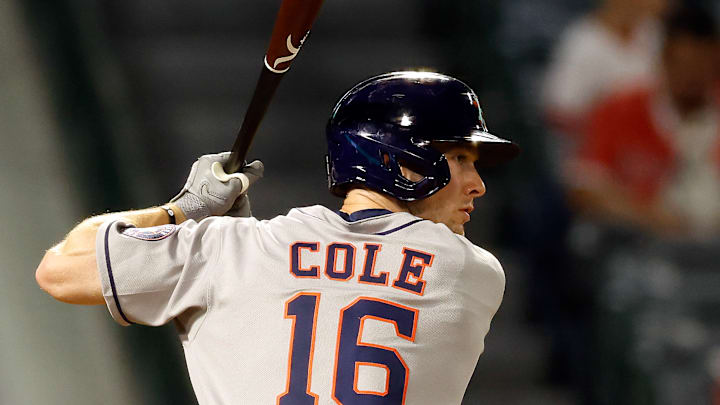
Outfielder Zach Cole (No. 17)
Zach Cole got the call to the bigs in September as yet another injury to Yordan Alvarez left the Astros' roster thin as they were fighting for a playoff spot. While Houston ultimately came up short, it wasn't because of the Ball State product.
In 15 big league games, Cole slashed .255/327/.553 with four homers and three steals. That came on the heels of a .279/.377/.539 minor league campaign, where he spent 82 games at Double-A Corpus Christi and 15 contests at Triple-A Sugar Land.
Cole brings speed, power, and athleticism to the table, as well as a much-needed lefty bat. With Jacob Melton departing in the Burrows trade, he's the closest outfield prospect to being big league ready, and could rise to the role of starting center fielder should the club trade away Jake Meyers this winter.
While there's a lot to like there, Cole has a fatal flaw, and it is the strikeout. He posted a 35.1% K-rate in the minors last season, and struck out at a 38.5% clip during his brief big league stint. That can't continue if he's going to be productive over a larger sample, and it is going to be the key area of development for him in 2026.
Starting pitcher Miguel Ullola (No. 4)
Miguel Ullola has tantalizing stuff and could be one of the first call-ups should Houston's paper-thin rotation need reinforcements. The 23-year-old right-hander spent the entire 2025 campaign at Sugar Land, posting a 3.88 ERA over 113.2 innings pitched.
Ullola has incredible strikeout stuff, posting 10.37 K/9 thanks to his blazing fastball that comes in with ample ride, and a sharp slider that can be absolutely devastating. This pair of pitches made him nearly unhittable at Triple-A, surrendering a stellar .183 batting average against.
Unfortunately, Ullola has a free pass problem, allowing 6.18 BB/9, which contributed greatly to his 1.35 WHIP. If he's struggling with walks that much at Triple-A, imagine what more disciplined big league hitters will be able to do against him. Furthermore, his changeup is still more of a fringy offering than anything, and he'll need to refine it in order to have a consistent weapon against lefties.
Ullola ideally needs to cut the walks in half in order to prove he's worthy of a rotation spot. If he can, the Astros will have a dynamic arm waiting in the wings. If not, working as a reliever would be his absolute best-case scenario.
Second baseman Brice Matthews (No. 1)
Brice Matthews, the Astros' top prospect, is at the intersection of immense raw tools and a game in need of refinement. The soon-to-be 24-year-old brings with him power, patience, and incredible speed, posting a .830 OPS with a 14.1% walk rate and 41 stolen bases last season at Sugar Land.
The issue you see with Matthews has to do with his swing decisions and contact rates, particularly within the strike zone. Matthews' patience at the plate can border on passivity, and in 2025, that manifested itself in a swing rate of just 44.2% and a zone contact rate of just 76.7%. By attacking hitters' pitches earlier in the count, Matthews could bring that zone contact rate north of 80%, which will be essential for his hit tool to play at the next level. He'll need to manage that without a severe drop-off in plate discipline, however.
With Jose Altuve potentially seeing more time in left field in 2026, Matthews has the opportunity to earn regular reps at second base, but he'll need to show out in spring training to do so. Otherwise, he'll be stuck in Sugar Land until he proves that he can make enough contact to be productive.
Catcher Walker Janek (No. 3)
When the Astros picked Walker Janek with the 28th pick of the first round in 2024, it looked like they were getting a steal. Janek was rated much higher on most big boards and was generally regarded as the top catcher in his draft class, thanks to his strong arm, soft hands, nimbleness behind the plate, and feel for game calling. Throw in a line-drive approach with some average power, and you have a truly tantalizing prospect.
Janek hasn't fully broken out with the bat since turning pro. Originally thought to be a fast riser, Janek's brief appearance at Hi-A Asheville in 2024 saw him hit just .175/.214/.289. He'd repeat the level in 2025, faring better with a .263/.333/.433 mark. Already 23, Janek will need to take another step forward in 2026 to prove he's the real deal.
The biggest area that needs improvement is his plate discipline. Janek managed just 30 walks against 106 strikeouts in 92 games last season, and saw the issue carry over to the Arizona Fall League, where he hit .241/.288/.481 with just four walks and 22 strikeouts in 13 contests. If he can get over that hump, it will go a long way toward legitimizing Houston's farm. If not, he might not be more than a glove-first backup.
 Add us as a preferred source on Google